Line-Drying Clothes in a Real Modern Home
Our craftsman's basement has a slightly damp corner that no amount of dehumidifying will fully fix, so for years I assumed line-drying in a 1920s Portland house was a fantasy for people…

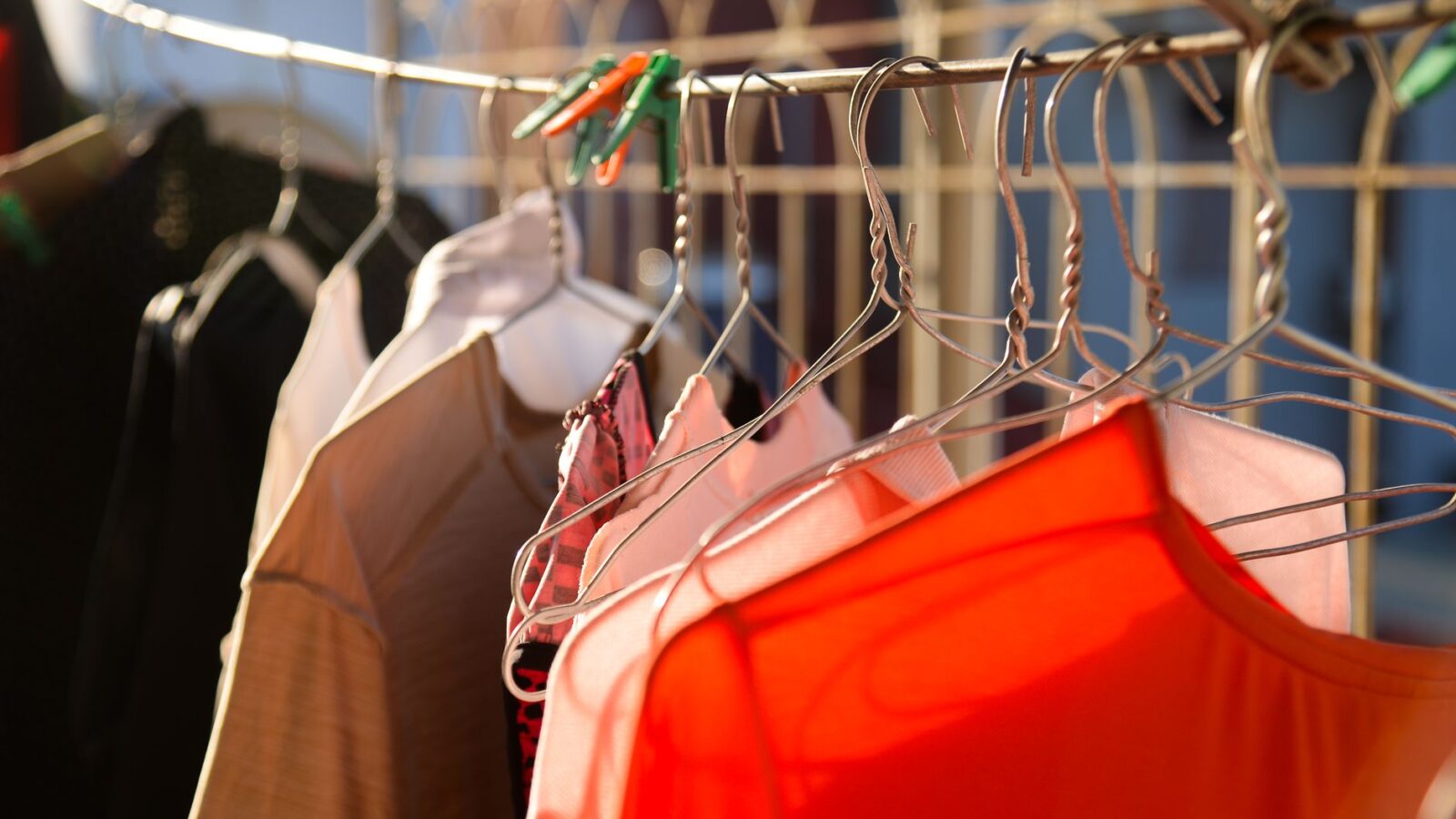
Our craftsman’s basement has a slightly damp corner that no amount of dehumidifying will fully fix, so for years I assumed line-drying in a 1920s Portland house was a fantasy for people with sunny yards and no rain forecast. Then I actually measured what our old electric dryer was pulling per load, watched the number climb past 3 kWh, and decided to build a system that worked for our real life: two adults, one greyhound with opinions about laundry piles, and roughly 180 rainy days a year.
What line-drying actually saves
A standard vented electric dryer uses about 2.5 to 4 kWh per load, and a full-size gas dryer uses roughly 22,000 BTU plus around 0.3 kWh of electricity for the drum and controls. At the U.S. residential average of about 17 cents per kWh reported by the EIA Electric Power Monthly, that puts most electric dryer loads between $0.42 and $0.68 each. In higher-rate markets like coastal California or parts of New England, I have seen loads push past $1.00.
Skip the dryer entirely and you keep that money. Two loads a week for a year is roughly $44 to $70 back in your pocket, plus you avoid the heat, the lint, and the slow shredding of your favorite t-shirts. That last part is not marketing fluff. The DOE’s laundry guidance is blunt about tumble-drying being the main reason cotton clothes fade and pill.
Setups that fit real homes
I have installed some version of these in every place I have lived since 2016, including a 550 square foot studio in inner Southeast Portland. None of them require a yard.
The retractable indoor line
My workhorse is a Brabantia Pull-Out Wireline, which mounts to the wall and pulls out to about 15 feet of usable line across five strands. Whitmor makes a similar unit for around $28 to $35. Mount it above the tub, across a laundry alcove, or between two studs in a hallway that gets afternoon sun. The line disappears when not in use, which is the entire reason non-line-drying spouses tolerate it.
The tension pole rack
For renters who cannot drill into walls, a floor-to-ceiling tension pole system works. IKEA’s MULIG line and various pressure-mount telescoping poles (rated for 7 to 10 foot ceilings) let you rig two horizontal bars across a corner without a single screw. I have used one in a bathroom over a tub for six years, and the finish is still fine.
The folding wall rack
If you want capacity without a permanent line, a folding accordion-style wall rack gives you 20 to 30 feet of drying surface that folds flat to about 3 inches deep. Leifheit’s Telegant and the Greenway wall-mount are the two I recommend most often. Mount into studs, not just drywall anchors. A full load of wet cotton weighs 15 to 20 pounds and you do not want to find that out at 6 a.m.
The classic tripod or umbrella dryer
If you do have outdoor space, even a small balcony, a rotary umbrella dryer like the Brabantia Lift-O-Matic gives you 100 to 165 feet of line and folds down like a closed umbrella. Sun plus a breeze will dry a full load of cotton in 2 to 4 hours.
Fabric-by-fabric drying times
Times below assume a moderately loaded indoor rack, 68 to 72 degrees Fahrenheit, and a small fan pointed at the fabric from about 6 feet away. Air movement matters more than temperature.
| Fabric | Indoor dry time (fan on) | Outdoor dry time (sun, breeze) | Notes |
|---|---|---|---|
| Synthetics (polyester, nylon) | 3-5 hours | 1-2 hours | Fastest. Great for the middle of the rack. |
| Cotton t-shirts | 6-9 hours | 2-4 hours | Snap them flat before hanging to reduce ironing. |
| Cotton or linen bedding | 8-12 hours | 3-5 hours | Fold once over the line for capacity. |
| Denim | 12-18 hours | 4-6 hours | Hang inside out from the waistband. |
| Heavy towels | 10-16 hours | 4-6 hours | Give a 10 second high-heat tumble after to soften. |
| Wool sweaters | 18-30 hours | Do not hang | Dry flat on a mesh rack to keep the shape. |
The order I actually load a rack
Speed comes from how you space and sequence the clothes, not from any single magic product.
- Give the wash an extra spin cycle first. Most modern washers offer a 1200 to 1400 RPM final spin. That single button press cuts drying time by 20 to 30 percent because the clothes come out with far less residual water.
- Hang the heaviest, wettest items (jeans, towels) on the outside strands where air moves most freely.
- Put quick-drying synthetics in the middle where airflow is slower.
- Leave two finger-widths of space between garments. Touching fabric traps moisture and doubles the drying time.
- Point a small clip fan (a $15 Honeywell HT-900 pulls about 45 watts) at the setup for the first two hours. Running that fan for eight hours costs roughly 6 cents. That is the whole cost.
What goes wrong
Most line-drying disasters trace back to one of four things: overloaded lines that snap or sag, insufficient airflow leading to musty smells, drying in a room without ventilation and pushing indoor humidity past 60 percent (mold territory), or forgetting that direct sun for hours will fade dark colors.
The humidity one is worth taking seriously in a tight house. If you are drying two loads a week inside a 900 square foot apartment, you are dumping roughly 5 to 8 pounds of water into the air. Crack a window, run the bath fan, or use a small dehumidifier. I keep a cheap hygrometer on the shelf and target 40 to 55 percent relative humidity indoors, in line with the EPA’s mold-control guidance.
Cotton that dries too slowly in a still, warm room really does start to smell within about 18 hours. If you cannot get airflow, do not start the load in the evening.
When a heat-pump dryer is still the smarter answer
I want to be honest about this because I have watched families go all-in on line-drying and quietly go back to a machine within four months. Line-drying works beautifully for two adults doing two to four loads a week. It gets punishing at six or more.
If you are washing for three or more kids, if you live in a climate that is genuinely cold and humid for months, or if your household simply will not tolerate a rack in the living room, a heat-pump dryer is the honest answer. ENERGY STAR certified heat-pump dryers pull roughly 1 to 1.5 kWh per load, which is 50 to 70 percent less than a conventional vented electric model. The ENERGY STAR clothes dryer database lists dozens of models from Miele, LG, Whirlpool, and Bosch.
A good compromise, and what I actually run: line-dry everything I care about (shirts, sweaters, jeans, linens) and use a small heat-pump dryer for socks, underwear, towels, and any load that has to be done fast. The dryer runs maybe three times a month instead of ten, which stretches its life and cuts our laundry electricity bill by about 65 percent compared to the old vented unit we replaced in 2022. That was the switch that finally made the math and the reality line up in one damp Portland basement.
Frequently asked questions
Will line-drying clothes indoors cause mold in my home?
Only if you skip ventilation. Two loads a week release roughly 5 to 8 pounds of water into the air, so open a window, run a bath fan, or add a small dehumidifier and keep indoor humidity between 40 and 55 percent. A $12 hygrometer takes the guesswork out. In a tight, well-sealed home in winter, I run a 30-pint dehumidifier for about 4 hours per load.
How do I keep line-dried towels from feeling like cardboard?
Two tricks. First, snap each towel hard three or four times before hanging to fluff the loops. Second, once fully dry, toss them in the dryer for a 5 to 10 minute high-heat tumble with a wool dryer ball. That combined cycle uses about 0.3 kWh, roughly 5 cents, and gives you the softness of tumble-drying without the electricity cost of a full 45-minute run.
Are there HOA or landlord rules against outdoor clotheslines?
Sometimes, but 19 U.S. states plus D.C. have “right to dry” laws that override HOA bans on outdoor drying. Check your state statutes before assuming you cannot install one. For rentals, most leases only restrict permanent modifications, so a freestanding umbrella dryer or tension-pole indoor rack usually falls outside those clauses.
What is the fastest indoor drying setup for a small apartment?
A retractable 15-foot wall line mounted above the bathtub, plus a $15 clip fan aimed at it, plus running an extra 1400 RPM spin in the washer first. That combination will fully dry a mixed load of synthetics and light cottons in about 5 to 7 hours and takes up zero floor space when retracted. Total install cost is under $60.
Does line-drying really make clothes last longer?
Yes, and it is easy to verify. Tumble-dryer lint is literally your clothes being ground down by heat and friction. Skipping the dryer for shirts and denim can extend garment life by 30 to 50 percent based on ACEEE and Consumer Reports fabric-wear testing. My oldest line-dried t-shirts are from 2015 and still in the rotation.
Related guides

How to Talk to Your Family About Energy-Conscious Choices
Most energy conversations inside a family go sideways for reasons that have nothing to do with watts or kilowatt-hours. They go sideways because of identity, history, and the small daily friction of…

Five Sustainable Lifestyle Myths Worth Letting Go
Sustainable living is full of well-meaning advice that does not quite hold up under a second look. Some of it was true a decade ago, some was never true, and some has…

An Honest Product Roundup for an Eco-Friendly Kitchen
A reader emailed me last spring asking which exact brand of beeswax wrap she should buy. I wrote back that the brand barely matters, but the category absolutely does. This roundup walks…