Net Metering Myths That Quietly Reshape Your Solar Payback
A reader in Sacramento forwarded me her first twelve solar bills last spring, convinced her installer had shorted her by roughly $1,400. Her 6.8 kW system was producing exactly what the design…

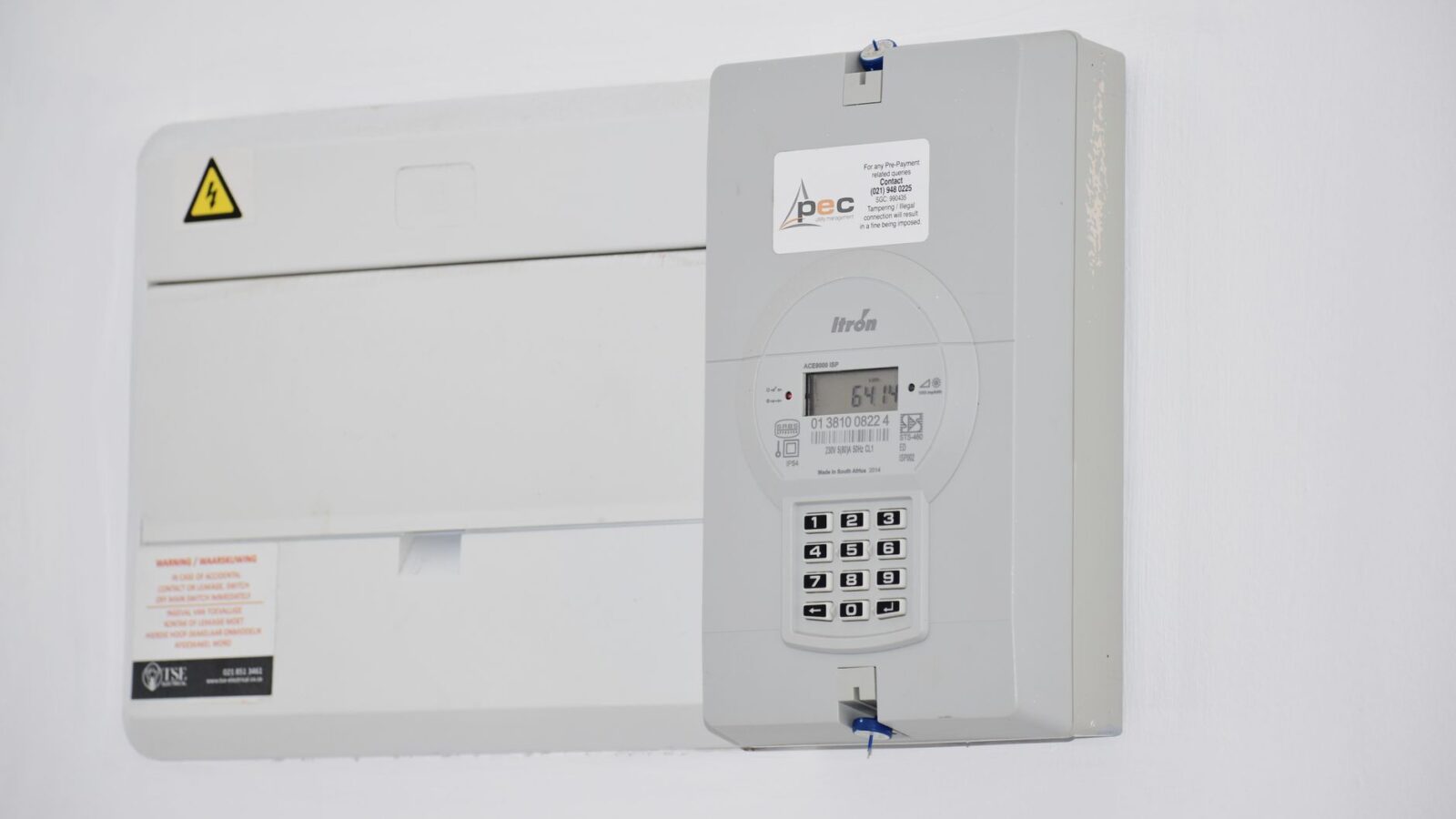
A reader in Sacramento forwarded me her first twelve solar bills last spring, convinced her installer had shorted her by roughly $1,400. Her 6.8 kW system was producing exactly what the design predicted. The math looked wrong because she had assumed every kilowatt-hour she exported would be credited at the same rate she paid for kilowatt-hours she imported. Under NEM 2.0 on a time-of-use plan, it was not.
The retail-rate myth is where most of the confusion starts
The single most stubborn belief I run into is that utilities “buy back your solar at the same price they sell it to you.” That was roughly true under California’s original NEM 1.0 rules, and it is still roughly true in a handful of states, but the roughly is doing a lot of work.
Even under generous net metering, most utilities apply non-bypassable charges to every kilowatt-hour you import from the grid, whether or not your solar covered it on paper. In California those charges have historically run between 2 and 3 cents per kilowatt-hour, covering things like public purpose programs, nuclear decommissioning, and low-income assistance. They look small individually and add up to real money over 20 years.
NEM 1.0, 2.0, and 3.0 are three very different deals
California’s investor-owned utilities have moved through three generations of net metering, and each one changed the shape of a homeowner’s payback.
NEM 1.0 (roughly 2007 to 2016)
Full retail rate credit for exports, no mandatory time-of-use plan, no non-bypassable charges layered on top of netted energy. If a homeowner got in early and stayed grandfathered, that system is likely paying back at close to the pace its installer promised.
NEM 2.0 (2016 to April 2023)
Still retail rate for exports, but three changes hurt the math: mandatory TOU rates, non-bypassable charges applied per imported kilowatt-hour, and a small interconnection fee. A 7 kW system in PG&E territory that would have netted out to zero under 1.0 might owe $300 to $500 a year under 2.0 on volumetric charges alone.
NEM 3.0 (April 2023 forward)
Officially called the Net Billing Tariff, this reset payback expectations across the state. Exports are now valued at “avoided cost” rates set by the CPUC, which average roughly 5 to 8 cents per kilowatt-hour across a year, versus import rates that regularly touch 30 to 55 cents on peak TOU tiers. The CPUC overview of the tariff lays out the mechanics. Payback windows that used to land in the 6-9 year range now regularly stretch to 9-15 years for solar-only systems.
What other states actually do
Outside California the rules vary widely, and calling it all “net metering” flattens real differences.
- New York (VDER Value Stack): Exports are valued as a stack of components (energy, capacity, environmental value, demand reduction, locational value). Residential rooftop generally still nets close to retail, but the stack is what the utility actually uses on the back end.
- Massachusetts (SMART): A declining block incentive that pays a fixed rate per kilowatt-hour produced (not just exported) on top of net metering credits, with the rate stepping down as capacity fills.
- Arizona (APS and TEP): Export credits are set at a “resource comparison proxy” rate, currently around 7-8 cents per kilowatt-hour, well below retail.
- Hawaii: Traditional NEM closed in 2015. Newer programs like Customer Grid Supply Plus pay export rates in the 10-14 cent range depending on island and time of day.
- Idaho and Utah: Several utilities have moved toward instantaneous netting or export rates well below retail, sometimes settled monthly rather than annually.
The single best tool I send people to is the DSIRE database maintained by NC State. Search your specific utility, not just your state, because investor-owned, cooperative, and municipal utilities within the same state often run entirely different programs.
Time-of-use export windows change the answer again
Even when your export rate looks decent on paper, the hours it applies matter. Under most TOU plans, peak windows fall between 4pm and 9pm, when a typical fixed south-facing array is already dropping off for the day. That means the electricity you sell back gets valued at low off-peak rates, while the electricity you buy in the evening gets billed at high on-peak rates.
A west-facing tilt (say, 240 to 260 degrees azimuth) can shift more production into the 3pm to 6pm window and materially improve export value. On a 6 kW system I helped a neighbor evaluate, modeling a west-southwest orientation instead of due south dropped annual production by around 6 percent but raised the dollar value of exports by close to 12 percent under the utility’s TOU schedule.
Monthly true-up versus annual true-up
Ask your utility exactly two things about credits: how often they true up, and what happens to leftover credits at the end of that period. Under California’s annual true-up, surplus credits at year-end are typically paid out at a wholesale “net surplus compensation” rate that has hovered around 3 to 4 cents per kilowatt-hour. That is why oversizing an array by 20 percent to “bank” summer production for winter often loses money.
Some utilities true up monthly. In those cases any credit above your usage in a given month effectively evaporates or is paid at a scrap rate. Sizing to your actual consumption instead of your available roof area becomes a financial decision, not just a technical one.
A worked scenario
Picture a Sacramento household under NEM 3.0 with 12,000 kWh of annual consumption and a 7 kW system producing 10,500 kWh. Self-consumption without a battery lands around 35 percent, exports get valued at an average 6 cents per kilowatt-hour, imports run an average 34 cents per kilowatt-hour, and non-bypassable charges add around 2 cents on every imported kilowatt-hour.
Solar-only savings land near $1,850 per year on a bill that was previously around $4,100. Add a 10 kWh battery cycled daily to raise self-consumption to about 75 percent, and annual savings climb to roughly $2,700, but you have added $9,000 to $12,000 in equipment cost. That is why battery attach rates on new California installs jumped past 60 percent within a year of NEM 3.0 taking effect.
What goes wrong
The failure modes I see most often:
- Homeowners quoted payback numbers based on old NEM 2.0 assumptions on systems that will actually interconnect under 3.0. Ask your installer to show production and export dollars using the current tariff, not last year’s.
- Systems sized to 100 percent of annual consumption when the utility trues up monthly. The excess summer kilowatt-hours never earn what the spreadsheet showed.
- Batteries specified without knowing the utility’s TOU windows, so the battery discharges before the peak price hits.
- Grandfathering assumptions on transfer of ownership. In several states, NEM 1.0 or 2.0 grandfathering does not survive a home sale, or survives only for a limited term. Check before you use a favorable tariff as a selling point.
- Ignoring fixed charges. A minimum monthly bill of $10 to $15 continues regardless of how much you produce.
What to actually ask your utility
Before you sign any solar contract, call your utility’s interconnection line (not your installer) and get answers to these six questions in writing or from a screenshot of the current tariff page:
- Which tariff will my system interconnect under, and what is the current export credit structure (retail netting, avoided cost, VDER stack, other)?
- Is time-of-use mandatory for solar customers, and what are the current peak, part-peak, and off-peak windows and rates?
- What non-bypassable or unavoidable per-kilowatt-hour charges apply to energy I import from the grid?
- Is true-up monthly or annual, and what happens to any net surplus credits at the true-up date?
- What is the minimum monthly bill or fixed customer charge?
- If I sell the home, does the current tariff transfer to the new owner, and for how long?
Anyone quoting a payback figure without those six answers is guessing. In my own retrofit I have watched three tariff revisions come and go under Portland General Electric alone, and each one moved the arithmetic for anyone considering a rooftop system here. Payback is not a fixed property of the panels on your roof. It is a moving contract with a utility that has every incentive to revisit it.
Frequently asked questions
Can I switch from NEM 3.0 back to NEM 2.0 if my install date qualifies?
Only if your interconnection application was submitted and deemed complete by the utility before April 15, 2023. Missing that cutoff locks the system into the Net Billing Tariff for its grandfathering period. Confirm the acceptance date directly with PG&E, SCE, or SDG&E, not with your installer, and get the interconnection agreement in writing before you sign anything.
Does adding a battery move me onto a different tariff?
No, the tariff is set at interconnection and a battery does not change which NEM version applies. It changes the economics inside that tariff by letting you self-consume more and export less during low-value windows. Under NEM 3.0 that shift is often the difference between a 14 year and a 9 year payback on the combined system.
Are SMUD, LADWP, and other municipal utilities on NEM 3.0?
No. NEM 3.0 applies only to California’s three investor-owned utilities. Municipals like SMUD, LADWP, and Roseville Electric write their own net metering rules under separate governance. SMUD, for example, uses a Solar and Storage Rate with time-varying export values that stay closer to retail than the Net Billing Tariff’s avoided cost figures.
How long does the NEM tariff I sign up under actually stay in effect?
California’s IOUs currently offer a 20 year grandfathering period from your interconnection date, though the exact terms have shifted across tariffs and could shift again. Home sales sometimes reset the clock or transfer the remaining term to the buyer depending on the tariff and utility. Save the grandfathering language with your closing documents so a future buyer or appraiser can verify it.
Does the 30 percent federal tax credit apply differently under NEM 3.0?
No, the federal Residential Clean Energy Credit under IRS Section 25D is set by federal tax law and is unaffected by state tariff rules. You still get 30 percent of qualifying equipment and installation costs through 2032, including standalone or paired batteries of 3 kWh or larger. A tax professional should confirm how it applies to your specific return and any state credits stacked on top.
Related guides

Five Mistakes That Shorten a Home Battery’s Life
A home battery should last 10 to 15 years, but the warranty assumes you treat it the way the engineers intended. Most batteries that die early are not defective. They were used…
Scenario: Falling for an Influencer Energy Pitch
Marcus is 32, lives in a rented duplex outside Phoenix, and pays roughly 180 dollars a month for electricity in summer. He saw a 90 second video of a smiling creator standing…
Scenario: Buying a Portable Power Station Without Doing the Math
Nadia wanted peace of mind before hurricane season. She watched a few videos, picked a 1500Wh portable power station that looked sturdy, and felt prepared. Twelve hours into her first real outage,…