Rooftop Solar vs Community Solar: A Plain-English Comparison
The roof was 27 years old, mostly north-facing, and shaded by a pair of Douglas firs that the owner had no intention of removing. I was helping a friend price a rooftop…

The roof was 27 years old, mostly north-facing, and shaded by a pair of Douglas firs that the owner had no intention of removing. I was helping a friend price a rooftop system, and the installer’s site assessment came back with a production estimate about 42% below what a comparable unshaded south-facing roof would produce. That was the moment community solar stopped being a footnote in our conversation and became the actual answer.
What community solar actually is
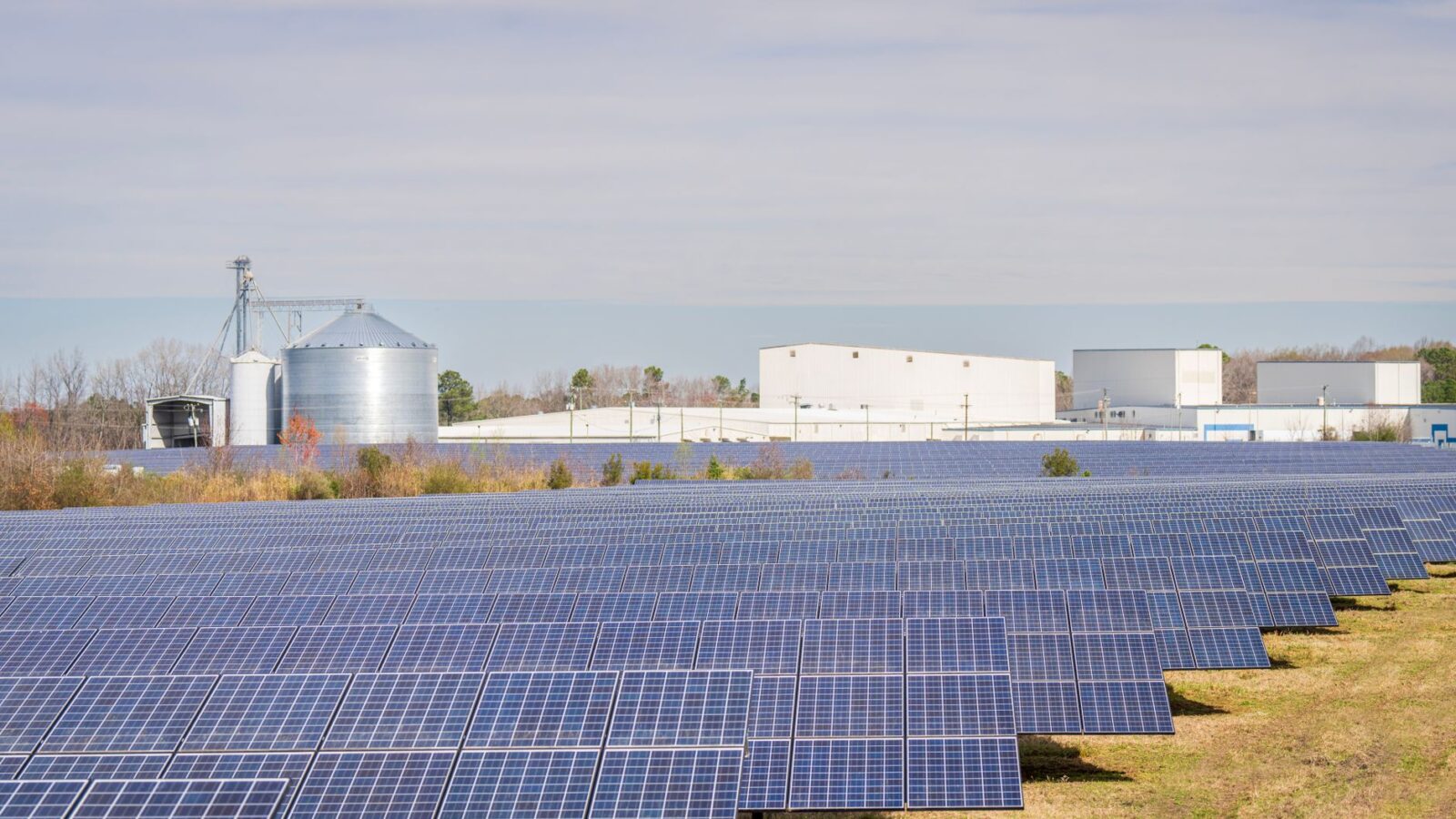
Community solar (sometimes called a solar garden or shared solar) is a larger array, usually 500 kW to 5 MW, built somewhere else: an old landfill, a warehouse roof, a rural field. You subscribe to a share of that array’s output, and the electricity your share produces shows up as a credit on your monthly utility bill. You are not buying panels. You are not putting anything on your house. You sign a subscription agreement, the developer or a third-party manager handles operations, and your utility does the billing math.
The U.S. Department of Energy community solar overview counts more than 7 GW of installed capacity across 44 states, and the National Community Solar Partnership is targeting 20 GW by 2025. It has grown into a real option, not a curiosity.
When rooftop still wins
I want to be honest about this upfront. If you own your home, have a south, southwest, or southeast facing roof with less than about 15% shading, and the roof has at least 15 more years of life in it, rooftop usually beats a subscription over a 20-year window. You claim the 30% federal Residential Clean Energy Credit, you own the equipment, and your effective cost per kWh drops toward zero after payback.
A well-sited 7 kW system in the Portland area, installed for around $2.80 per watt after shopping three quotes, comes to roughly $19,600 gross and about $13,720 after the federal credit. It produces somewhere around 7,500 to 8,500 kWh a year here. That math is hard to beat if the roof cooperates.
When community solar is the smarter fit
The situations where I steer people toward a subscription instead:
- You rent. Panels on someone else’s roof are not your investment, and landlord cost-sharing conversations tend to stall.
- Your roof is shaded. Anything above roughly 20% annual shading breaks the economics fast, and tree removal is often a nonstarter.
- Your roof faces the wrong way. North-facing pitches in the Pacific Northwest lose 25 to 30% of what a comparable south pitch produces.
- Your HOA restricts visible panels. Some CC&Rs still limit street-facing arrays, and fighting the board is a project of its own.
- Your roof is 18-plus years old. Adding a system means paying to remove and reinstall it when the shingles need to be redone, usually $2,000 to $4,000 on a typical home.
- You expect to move within 5 years. Zillow and Berkeley Lab research show a rooftop resale premium, but payback timelines assume you stay put long enough to see it.
The subscription math, played out
Here is the version I walk through with people. Rates vary by state and program, but the shape is consistent.
| Line item | Monthly amount |
|---|---|
| Utility bill credit from your share (say 400 kWh at 13 cents) | +$52.00 |
| Subscription fee to the developer (typically a 10% discount on that credit) | -$46.80 |
| Net monthly savings | $5.20 |
That $5.20 is not going to change your life. Over a year it is $62. Over 20 years, with modest rate escalation, maybe $1,800 to $2,400 in savings. The point is not that community solar makes you rich. The point is that you get some rate protection, you support new generation, and you take on essentially no equipment risk.
How the bill credits actually work
The mechanism is called virtual net metering or bill crediting, and it varies by state. In programs across Illinois, New York, Massachusetts, Minnesota, and Oregon, your utility receives the array’s production data and applies a per-kWh credit at a defined rate. Sometimes that rate is the residential retail rate, sometimes a “value of solar” rate that is a few cents lower. In the NY-Sun community solar program, for example, the credit shows up as a distinct line item on your Con Edison or National Grid bill and rolls forward month to month if you overproduce.
Two things to pin down before you sign:
- What rate is my share credited at, and can the developer change it?
- What happens to credits that pile up in the sunny months? Do they roll over indefinitely, expire annually, or cash out?
Cancellation and portability
This is where community solar quietly beats a rooftop loan. Reputable programs let you cancel with 30 to 90 days written notice, no equipment to remove, no lien on your house. If you move within the utility’s service territory, most programs let you transfer the subscription to your new address. If you move outside the territory, the standard practice is to cancel or reassign your share to a waitlisted neighbor.
Compare that to a 20-year rooftop loan on a house you sell in year 6. You either pay it off at closing or convince the buyer to assume it, and I have watched both scenarios get awkward.
Where community solar can go wrong
I do not want to sell this as risk-free, because it is not.
Developer bankruptcy. If the company that owns and operates the array goes under, your subscription can be transferred, restructured, or in messy cases, temporarily suspended while the receiver sorts things out. Your utility credits usually continue because the array is still producing, but the subscription management side can get chaotic. Ask who the asset manager is and whether the operator has been in business at least 6 to 9 years.
Rate structure changes. A few states have revised how virtual net metering credits are calculated mid-stream. Read the contract clause about “regulatory changes” carefully.
Fuzzy savings marketing. Some door-to-door programs advertise “20% off your electric bill” and quietly mean 20% off the subscribed portion, which might only be 30% of your usage. Do the arithmetic on your actual annual kWh (find it on 12 months of statements) before you sign anything.
Weak consumer protections. The Federal Trade Commission has flagged community solar signup practices in recent years. If a salesperson pressures you to sign at the door, walk away. The FTC guidance on residential solar is worth 10 minutes before any signature.
How I pick a project
- Confirm the program is legitimate by cross-referencing it on your state utility commission site or the DOE community solar map.
- Ask for the last 12 months of production data for the specific array, or a comparable one in the developer’s portfolio.
- Read the cancellation, transfer, and rate-change clauses out loud. Anything you cannot explain in one sentence is a red flag.
- Match your subscription size to about 90 to 100% of your annual usage, not 120%. Excess credits often expire.
- Save the enrollment confirmation and your first three bills after activation to verify the credits show up as promised.
Rooftop is still the right answer for a lot of homes, mine included eventually. But community solar exists precisely for the roofs, wallets, and life situations where rooftop does not fit. That is most of the country, honestly.
Frequently asked questions
Do I still pay my regular utility bill if I subscribe to community solar?
Yes. You keep the same utility, same meter, same monthly bill from them. What changes is that a credit line appears for your share of the array’s production, and a separate invoice arrives from the community solar operator for the subscription fee. In most states, community solar credits only offset the generation portion of your bill, not transmission or fixed grid charges.
Can I claim the 30% federal tax credit through community solar?
Almost never. The Residential Clean Energy Credit requires you to own equipment installed on property you live in. Subscription-model community solar means you are buying output, not panels. A small number of ownership-model community solar co-ops do let members claim a proportional share, but subscription models, which are the majority, do not qualify.
What if my state does not have a community solar program yet?
Roughly 24 states have formal legislation enabling community solar as of 2025, and the list is still growing. You cannot subscribe to a project in a different state because bill credits flow through your local utility. Check the DSIRE database for current status where you live. If nothing exists yet, rooftop or a green power purchase option from your utility may be your only paths.
Does community solar affect my property value or complicate a sale?
No, because nothing physical is attached to your home. The subscription is a service contract, and most agreements either transfer to the new owner or terminate on move-out with 30 to 90 days notice. That flexibility is one of the stronger arguments for community solar if you are not sure how long you will stay in the house.
How long do community solar contracts usually last?
Terms have shortened noticeably in the last few years. Older contracts ran 20 to 25 years to match the array’s expected life. Newer subscription-model contracts commonly run month-to-month or 1 to 5 years with easy cancellation. If you are being asked to sign a 20-year agreement today, ask why, and read the exit clauses twice.
Related guides
How to Read a Solar Installer Quote Without Getting Lost
A solar quote can look like a 20-page wall of acronyms, model numbers, and disclaimers. It does not have to. Every proposal follows roughly the same shape, and once you know what…

Solar Panel Maintenance for Busy Homeowners
Solar panels are one of the lowest-maintenance pieces of equipment on your house, but lowest does not mean none. A few small habits, repeated at the right cadence, will keep your system…
An Honest Solar Payback Budget Guide for First-Timers
A woman at one of my old workshops in Eugene asked me, half embarrassed, how many years until solar "pays itself off." I told her the honest answer is that it depends…