What an Honest Vertical-Axis Wind Turbine Review Looks Like
A reader sent me a link last week to a sleek little vertical-axis turbine ad promising to "power your whole home" for under two thousand dollars. The video looked great. The numbers,…


A reader sent me a link last week to a sleek little vertical-axis turbine ad promising to “power your whole home” for under two thousand dollars. The video looked great. The numbers, once I sat down with a calculator, did not. Vertical-axis wind turbines are one of the most aggressively marketed products in residential energy right now, and most reviews online are either paid placements or breathless first impressions. This guide walks through what an honest evaluation actually looks like.
Vertical-axis wind turbines, or VAWTs, are the spiral and eggbeater-shaped units you have probably seen on social media, on rooftops in product renderings, and on crowdfunding pages. They look futuristic. They are usually quieter than the propeller-style turbines you see on farms. And a growing number of small companies are selling them directly to homeowners with claims that range from optimistic to outright fictional.
I am not here to tell you VAWTs are useless. In the right setting, with realistic expectations and an honest seller, a small VAWT can be a legitimate piece of a renewable energy mix. The problem is that most buyers are sold one without ever being shown the physics that would make them think twice. So before you spend money, here is what an honest review of this product category actually includes, and how to write one yourself for any specific unit you are considering.
Why vertical-axis turbines (VAWTs) get marketed so aggressively
The aggressive marketing has structural reasons, and understanding them helps you read between the lines on any sales page.
First, VAWTs photograph beautifully. The shape is novel, the motion is hypnotic, and they fit into rooftop and balcony product renderings in ways that traditional three-blade horizontal turbines do not. That makes them ideal for short-form video advertising and for crowdfunding campaigns that rely on visual appeal rather than performance data.
Second, the residential small-wind market is largely unregulated compared to solar. Solar panels have decades of standardized testing, certified output ratings, and warranty norms that most installers follow. Small wind has far fewer enforced standards, especially for units sold directly to consumers online. That gap creates room for sellers to publish output numbers that would be laughed out of a serious engineering review.
Third, and this is the uncomfortable part, the average buyer cannot easily verify the claims. Wind energy depends on cube-law physics (small changes in wind speed produce huge changes in output) and on site-specific factors like turbulence, obstruction, and average wind class. Most homeowners do not have years of on-site wind data, so a seller can show a graph at one wind speed and the buyer has no easy way to know if that wind speed ever actually occurs on their property.
If you read nothing else in this article, read this: five myths about residential wind power covers the broader category, and most of those myths apply doubly to vertical-axis units sold as “rooftop ready.”
The physical claims to verify (swept area, rated wind speed, cut-in speed)
Every wind turbine review worth reading checks three numbers. If a sales page hides any of these, that is your first red flag.
Swept area. This is the area the rotor passes through as it spins, measured in square meters. Power output is directly proportional to swept area. A turbine with one square meter of swept area cannot, by physics, produce the same power as one with five square meters, no matter how cleverly it is designed. Many VAWTs marketed to homeowners have swept areas between 0.5 and 2 square meters. That is small. For comparison, a single residential solar panel typically presents about 1.7 square meters of collection area, and a turbine and a panel of similar size will, in most US climates, produce very different annual energy totals (the panel almost always wins).
Rated wind speed. This is the wind speed at which the turbine produces its advertised peak power. Sellers love to quote peak power. They are less enthusiastic about telling you the wind speed required to reach it. A “1,000 watt” turbine rated at 12 meters per second (about 27 mph) is honest. A “1,000 watt” turbine that only specifies “1,000 watts” with no rated wind speed is almost certainly using an unrealistic test condition. Average US residential wind speeds at rooftop height in suburban areas typically range from 3 to 5 meters per second (7 to 11 mph), which is far below the rated condition of most small VAWTs.
Cut-in speed. This is the minimum wind speed at which the turbine actually starts generating electricity. Below cut-in, the unit either does not spin or spins without producing usable power. Cut-in speeds for small VAWTs typically range from 2 to 4 meters per second (4.5 to 9 mph). On a site where average winds are 3 meters per second, a turbine with a 3.5 meter per second cut-in will sit motionless for a large portion of the year.
If a seller publishes peak watts but omits swept area, rated wind speed, or cut-in speed, ask for them in writing before you pay. A reputable seller will provide all three without hesitation.
What real performance numbers should look like vs marketing
Here is a sanity check I run on any small wind turbine before taking it seriously. The annual energy a turbine can produce depends on its swept area, the turbine’s efficiency (capped at about 59 percent by Betz’s law and usually lower in practice), and the cube of the wind speed at hub height averaged over the year.
For a typical small VAWT with about 1 square meter of swept area, installed at a suburban site with an average annual wind speed of 4 meters per second and a real-world capacity factor of 10 to 15 percent (which is generous for rooftop sites), realistic annual production lands somewhere between 80 and 250 kilowatt-hours per year. That is roughly enough to run a modern refrigerator for 1 to 3 months, not a whole home for a year.
Compare those numbers to what marketing pages typically claim:
- Marketing claim: “Generates over 3,000 kWh per year.” Reality for a 1 sq m rooftop unit at a suburban site: closer to 100 to 250 kWh per year.
- Marketing claim: “Powers your whole home.” Reality: average US home uses about 10,500 kWh per year, which is roughly 40 to 100 times what a small rooftop VAWT typically produces.
- Marketing claim: “Works in any wind.” Reality: every turbine has a cut-in speed, and rooftop turbulence reduces effective output well below open-field equivalents.
- Marketing claim: “Pays for itself in 3 years.” Reality: at residential electricity rates of $0.12 to $0.35 per kWh and realistic output of 150 kWh per year, a $2,000 unit recovers $18 to $52 of value per year. The payback math, if you let it finish, often runs 30 to 100 years.
None of this means small wind is fake. Properly sited turbines on tall masts in genuinely windy locations produce meaningful energy. But the small rooftop VAWTs being sold to typical suburban homes are almost always oversold. Small wind turbines explained for homeowners goes deeper into when small wind genuinely works.
Mounting and structural realities people skip
The other half of an honest review is the install. Wind turbines impose loads that solar panels do not, and the marketing rarely covers this in detail.
- Roof loading. A turbine in operation transmits vibration into whatever it is mounted on. Many residential roofs are not engineered for that kind of cyclic load, and rooftop mounting can transmit hum and low-frequency vibration into living spaces.
- Mast height. Wind speed roughly doubles between ground level and 30 feet up in most suburban environments, and turbulence drops sharply with height. A turbine mounted on a 6-foot rooftop pole will see a fraction of the wind that the same turbine would see on a 30-foot freestanding mast.
- Permitting. Many jurisdictions classify any wind turbine over a certain swept area or mast height as a structure requiring permits, setbacks, and engineered drawings. Budget $300 to $1,500 for permitting in most US municipalities, more if your HOA needs convincing.
- Grid interconnection. If you want the turbine to feed surplus back to the grid, you need an inverter, a utility interconnection agreement, and often an inspection. None of that is free. Plan on $500 to $2,000 in additional electrical work depending on your local utility.
- Maintenance access. Bearings, brushes, and electrical connections need periodic inspection. A turbine mounted on a tall mast or steep roof requires either climbing gear or a service call. Budget $150 to $400 per year for serious maintenance.
Questions to ask any seller before paying
If a seller is selling you a real product, they will answer all of these without pushback. If they get evasive on any single one, that is a signal.
- What is the swept area in square meters?
- What is the rated wind speed at which the published peak power is achieved?
- What is the cut-in wind speed?
- What is the published annual energy production at an average wind speed of 4 meters per second, with the assumptions stated?
- Is the unit certified to a recognized small-wind standard, and can you provide the certification number?
- What is the warranty term, and does it cover the generator, the blades, the controller, and labor?
- What is the recommended mast height, and what is the production penalty for rooftop mounting?
- What is the expected service interval and annual maintenance cost?
- Can you connect me to three customers who have had the unit installed for at least 2 years?
- What is your return and refund policy if measured production falls more than 30 percent below the published estimate at my site?
Number 9 is the one that separates serious sellers from the rest. A real product has real customers willing to talk. A product whose seller cannot or will not introduce you to long-term users is usually a product whose long-term users would tell you not to buy it.
Buying any unfamiliar energy product without doing this homework is one of the most common ways people lose money in this space. If you want a broader look at that pattern, five mistakes people make with alternative energy covers the recurring traps across the category.
An honest wind turbine review is mostly arithmetic. Swept area, average wind speed, cube law, capacity factor, hours per year. Run the numbers before you trust the brochure, and most small rooftop VAWTs answer their own question.
Wind is a real renewable resource and small turbines can be a real part of a home energy mix. But the gap between marketing and physics in this product category is wider than almost anywhere else in residential energy. Treat any vertical-axis turbine claim as a hypothesis to test, not a fact to accept, and you will save yourself both money and disappointment.
Frequently asked questions
Are vertical-axis wind turbines actually quieter than horizontal ones?
Generally yes, especially at lower wind speeds. VAWTs tend to produce less aerodynamic blade-tip noise because the blade speeds are lower. They can, however, transmit low-frequency mechanical vibration through their mounts, which is sometimes more annoying indoors than a higher-pitched whoosh outdoors. If noise is a deciding factor, ask the seller for measured decibel data at multiple wind speeds and at multiple distances from the unit.
Can a small rooftop VAWT really power my home?
Almost never, despite what advertising suggests. A typical US home uses about 10,500 kWh per year. A small rooftop vertical-axis turbine in a suburban setting realistically produces 100 to 300 kWh per year, which is between 1 and 3 percent of household use. Even an aggressively optimistic estimate rarely passes 10 percent. For meaningful coverage of household electricity, solar usually outperforms small wind at the same budget in most US climates.
What average wind speed do I need for a small turbine to make sense?
A practical floor is about 5 meters per second (roughly 11 mph) at hub height, averaged over the year. Below 4 meters per second, output drops off so sharply that payback becomes effectively infinite for most residential price tags. Above 6 meters per second on a freestanding mast, the math starts to work. Get site-specific wind data before buying, ideally 12 months of logged readings at your intended mount height.
Why do sellers quote such high wattage numbers if real output is so low?
Peak wattage is measured at rated wind speed, which is often 11 to 13 meters per second. Most residential sites rarely see those wind speeds, and almost never sustain them. Quoting peak watts without quoting rated wind speed and annual energy production lets a seller put a big number on the box without making a claim that can be easily disproven. Always ask for annual kWh at your site’s average wind speed instead.
Are there any homes where a vertical-axis turbine genuinely makes sense?
Yes, in narrow conditions. Properties with sustained average wind speeds above 5 meters per second, open exposure with no upwind obstructions, and the ability to mount a turbine on a freestanding mast at least 30 feet tall can see meaningful production. Rural sites, coastal properties, and ridgeline locations often qualify. Suburban rooftops almost never do. If you live somewhere genuinely windy and have space for a real mast, small wind is worth a serious evaluation.
How long do small wind turbines actually last?
Quality small turbines from established manufacturers are designed for 15 to 20 years of service, with bearing replacement around year 10 and blade inspection annually. Budget direct-to-consumer units, especially those sold through crowdfunding, frequently fail within 2 to 5 years and may have no realistic warranty support. Ask any seller for documented field data on units that have been installed at least 5 years, and treat the absence of such data as meaningful information.
Read next in Wind & Alternative Energy
If this guide was useful, these two neighbouring pieces will fill in the surrounding context:
Sources and further reading
For the underlying data behind the numbers in this guide, and for the standards, incentive programs, and safety rules referenced throughout, see:
Related guides

Comparing Portable Battery Generators and Solar Kits
A reader recently asked me whether she should buy a portable battery generator for camping or a folding solar kit for the same money. Both products show up in the same online…
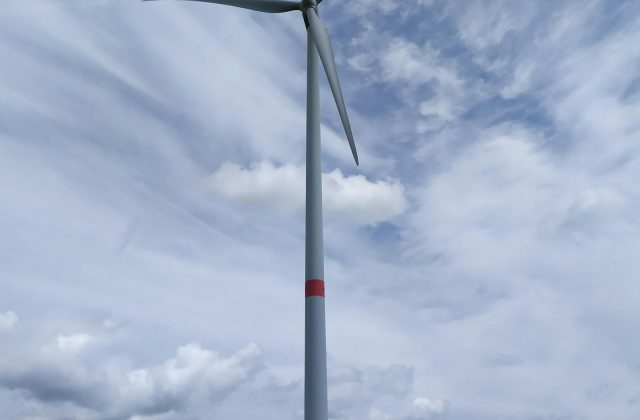
Maintenance Routines for a Residential Wind Turbine
A small wind turbine is more like a car than a solar panel. It spins, it pivots, it wears, and it rewards a steady maintenance habit with years of quiet service. This…
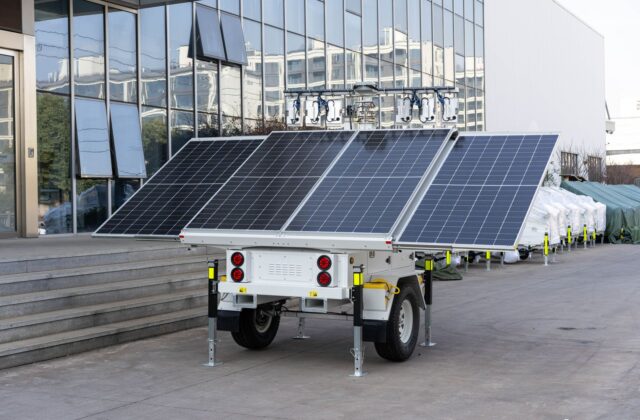
A Tiered Solar-Plus-Battery Emergency Kit for Power Outages
Our block lost power at 4:47 on a February evening two years ago, right as freezing rain started welding branches to power lines. The furnace fell silent, the fridge ticked once and…