How Many Solar Panels Your Home Actually Needs
A friend forwarded me a solar quote last month for 34 panels on her 1,600 square foot ranch outside Salem. She had asked one installer for a bid, taken what they proposed…

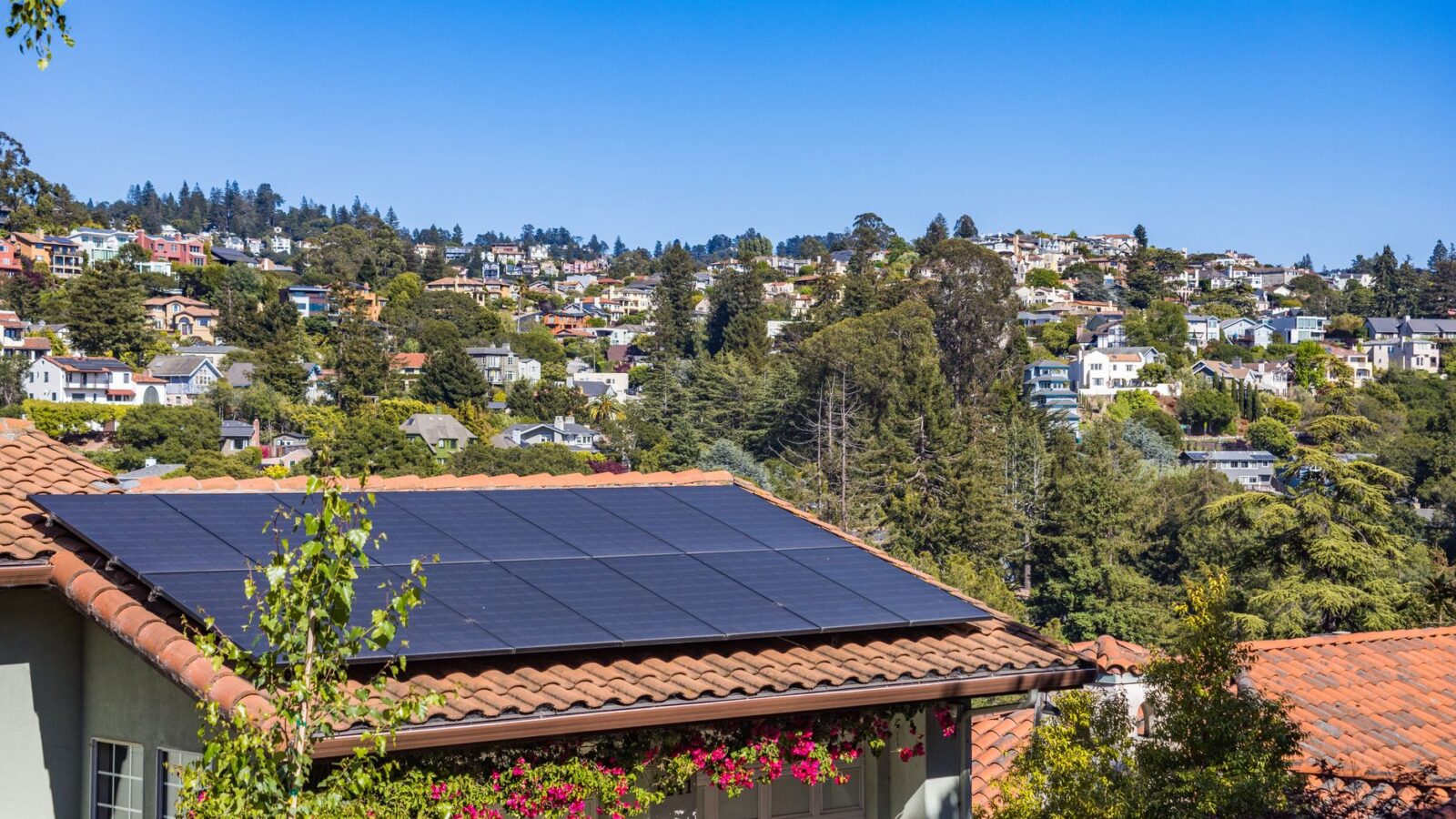
A friend forwarded me a solar quote last month for 34 panels on her 1,600 square foot ranch outside Salem. She had asked one installer for a bid, taken what they proposed at face value, and was ready to sign. The trouble was her actual electricity use averaged 720 kWh per month. That system would have been oversized by roughly 40 percent, cost her about $8,000 more than needed, and produced power her utility credits back at a discounted rate. Sizing solar is not magic, and you do not need an installer to run the first draft of the math for you.
Pull 12 months of utility bills first
Log into your utility account and download the last 12 statements. Portland General Electric, Pacific Power, and most PNW utilities have a “usage history” tab showing monthly kWh going back a year or two. I want a full year because any single month is misleading. My own 1920s craftsman burns about 1,100 kWh in January (heat pump working hard, dark by 4:30 p.m.) and drops to 380 kWh in July.
Add the twelve monthly numbers together and divide by 12. That average is your sizing target. For the examples below I will use two homes:
- A Portland-style home averaging 900 kWh per month (10,800 kWh per year)
- A Phoenix-style home averaging 1,600 kWh per month (19,200 kWh per year, mostly summer AC)
According to the U.S. Energy Information Administration, the average American home uses roughly 899 kWh per month, so 900 is a solid stand-in for typical.
Find your peak sun hours
A “peak sun hour” compresses a full day of sunlight, morning haze and low winter angles included, into one hour at 1,000 watts per square meter. The National Renewable Energy Laboratory publishes the NREL PVWatts Calculator, which will pull the exact figure for your ZIP code, roof pitch, and orientation. It is free and takes about three minutes.
Rough annual averages I use for quick math:
- Portland, Seattle, coastal Oregon: 3.4 to 3.8 peak sun hours per day
- Denver, Kansas City, Nashville: 4.8 to 5.3
- Phoenix, Las Vegas, southern New Mexico: 6.3 to 6.7
Winter is much lower and summer much higher. To carry a Portland home through December on solar alone you would need roughly 1.6 sun hours of production, which is why most grid-tied systems oversize slightly in summer and bank credits for winter through net metering.
Panel wattage math
Residential panels in 2025 land between 400 and 450 watts each. Common models on the roofs I look at include the REC Alpha Pure-R at 430 W, Q CELLS Q.TRON at 425 W, and the Silfab Prime at 440 W. I will use 425 W as the reference number.
The core formula:
System size (kW) = Monthly kWh ÷ (30.4 × peak sun hours × system derate)
The 30.4 is average days per month. The derate factor accounts for real-world losses: inverter efficiency, wiring resistance, panel soiling, temperature effects, and shading. PVWatts uses 14 percent default losses (a derate of 0.86). I am more conservative and use 0.77 for a normal roof with some dust, occasional early morning shade, and hot summer surface temperatures.
A fudge factor for real losses
Panels are rated at Standard Test Conditions: 25 °C, no wind, perfectly clean glass. Your roof in August in Phoenix is closer to 65 °C. Silicon panels lose roughly 0.35 percent of output per degree Celsius above 25, which is a 14 percent haircut in Phoenix summer and why hotter climates need slightly larger systems than raw sun-hour math suggests.
Other losses stack up:
- Inverter conversion: 3 to 5 percent
- DC and AC wiring: 2 to 3 percent
- Soiling from dust, pollen, and bird debris: 2 to 5 percent
- Panel mismatch and manufacturing tolerances: about 2 percent
- Snow, shade, and downtime: 2 to 15 percent depending on site
Multiply them together and a derate of 0.77 to 0.80 is realistic for most homes. Use 0.75 if you have real shading or a very hot climate.
Two worked examples
Portland home, 900 kWh per month
System size = 900 ÷ (30.4 × 3.6 × 0.77) = 900 ÷ 84.3 = 10.7 kW
Number of 425 W panels = 10,700 ÷ 425 = 26 panels (rounded up from 25.2)
Phoenix home, 1,600 kWh per month
System size = 1,600 ÷ (30.4 × 6.5 × 0.75) = 1,600 ÷ 148.2 = 10.8 kW
Number of 425 W panels = 10,800 ÷ 425 = 26 panels
Almost identical panel counts despite very different consumption, because Phoenix gets nearly twice the daily sun. The Phoenix array will produce roughly 18,000 kWh per year, the Portland array about 11,000. Both need around 500 square feet of unshaded south-facing roof.
Sizing table for common consumption levels
| Monthly kWh | Portland (3.6 hrs, 0.77) | Denver (5.0 hrs, 0.80) | Phoenix (6.5 hrs, 0.75) |
|---|---|---|---|
| 600 | 17 panels / 7.1 kW | 12 panels / 4.9 kW | 10 panels / 4.1 kW |
| 900 | 26 panels / 10.7 kW | 18 panels / 7.4 kW | 15 panels / 6.1 kW |
| 1,200 | 34 panels / 14.2 kW | 24 panels / 9.9 kW | 20 panels / 8.1 kW |
| 1,600 | 45 panels / 19.0 kW | 31 panels / 13.2 kW | 26 panels / 10.8 kW |
Where the math goes sideways
The formula gives you a starting point, not a finished design. Common ways it falls apart:
Roof space or orientation limits you. A north-facing shed roof, or one broken up by dormers, might only fit 18 panels no matter what your bills say. Split arrays across multiple orientations, or plan for a smaller system plus keeping some grid draw.
Your utility caps net metering. Many states, including parts of Oregon, will only credit you for production up to about 100 to 110 percent of your annual use. Oversize beyond that and the extra kilowatt-hours pay pennies. Check your utility’s specific rules before you sign a design.
Panel degradation over 25 years. Most manufacturer warranties promise about 85 to 90 percent output at year 25, based on roughly 0.4 to 0.5 percent loss per year. If you want the array to still cover your load in 2050, add 5 to 8 percent capacity today.
You did not account for coming loads. If you plan to buy an EV in the next three years, add 3,000 to 4,000 kWh per year to your baseline. A new heat pump in a mild climate is roughly 2,500 to 3,500 kWh per year of added electric load, though you will also drop natural gas.
You did not measure shade. A single tree branch across two panels of a string can knock 20 percent off the whole string on a traditional string inverter. Microinverters or DC optimizers help, but nothing beats trimming the branch.
A checklist before you call installers
- Download 12 full months of kWh from your utility
- Add 12 to 24 months of projected new loads (EV, heat pump, hot tub, workshop)
- Run your address through NREL PVWatts using a 425 W panel and a 0.77 derate
- Measure your unshaded south-facing roof area (roughly 18 to 20 square feet per panel)
- Read your utility’s current net-metering policy, including any cap on annual credits
- Confirm your service panel has capacity or budget for a main-panel upgrade
- Get at least three bids and compare panel count, wattage, and modeled annual kWh, not just dollar signs
Run this the day before your first installer visit. You will spot oversized quotes, undersized quotes, and the ones that quietly assume a shaded roof produces what an unshaded roof does. The math is the same whether you live in a Portland bungalow or a Phoenix ranch. Only the inputs change.
Frequently asked questions
Can I install fewer panels now and add more later?
Yes, but the incremental add is often surprisingly expensive because you pay again for permits, engineering, and an installer visit that would have been rolled into the original bid. If you know you want an EV or a heat pump within five years, size for that load upfront. If you truly do not know, ask the installer to size the inverter and racking for a 20 to 30 percent expansion so future panels can plug into existing infrastructure.
Do I need battery storage if I am sizing for full offset?
Not for the math above, which assumes grid-tied net metering. Batteries add roughly $10,000 to $18,000 to a residential project and typically pay back through outage protection rather than pure economics. If your utility has time-of-use rates or is phasing out full-retail net metering, a battery starts to make more financial sense, but it does not change how many panels you need.
Should I size for current use or future load?
Size for realistic three-year future load. Adding an EV alone can push a 900 kWh home to 1,200 kWh per month. Also check whether your local utility net-metering rules cap your system at 100 percent of the previous year’s usage, which some do. If they cap you, you may need to prove new load (like an installed EV charger) before upsizing later.
How much roof space does a 10 kW system actually need?
About 500 to 550 square feet of unshaded, south or west-facing roof for 24 to 26 standard 425 W panels, assuming you can lay them out in clean rectangular blocks. Break-up features like plumbing vents, chimneys, and skylights reduce usable area quickly, so measure the actual clear rectangles on your roof rather than the total footprint.
Related guides
Troubleshooting Low Solar Panel Output, Step by Step
Noticing less power from your solar panels than you expected? That dip can feel worrying, but most causes are common and fixable. This guide walks through the usual suspects in plain language,…
Choosing the Right Solar Inverter Without Overpaying
A reader emailed me last month asking why one quote listed a $1,200 inverter and another listed a $4,800 one for the same size system. Both installers swore theirs was the right…
An Honest Solar Payback Budget Guide for First-Timers
A woman at one of my old workshops in Eugene asked me, half embarrassed, how many years until solar "pays itself off." I told her the honest answer is that it depends…