Solar Permits and Interconnection: What to Actually Expect
The panels went up on my friend Rina's roof in Southeast Portland on a Tuesday in June. Her system did not produce a single kilowatt-hour until late August. Ten weeks, and only…

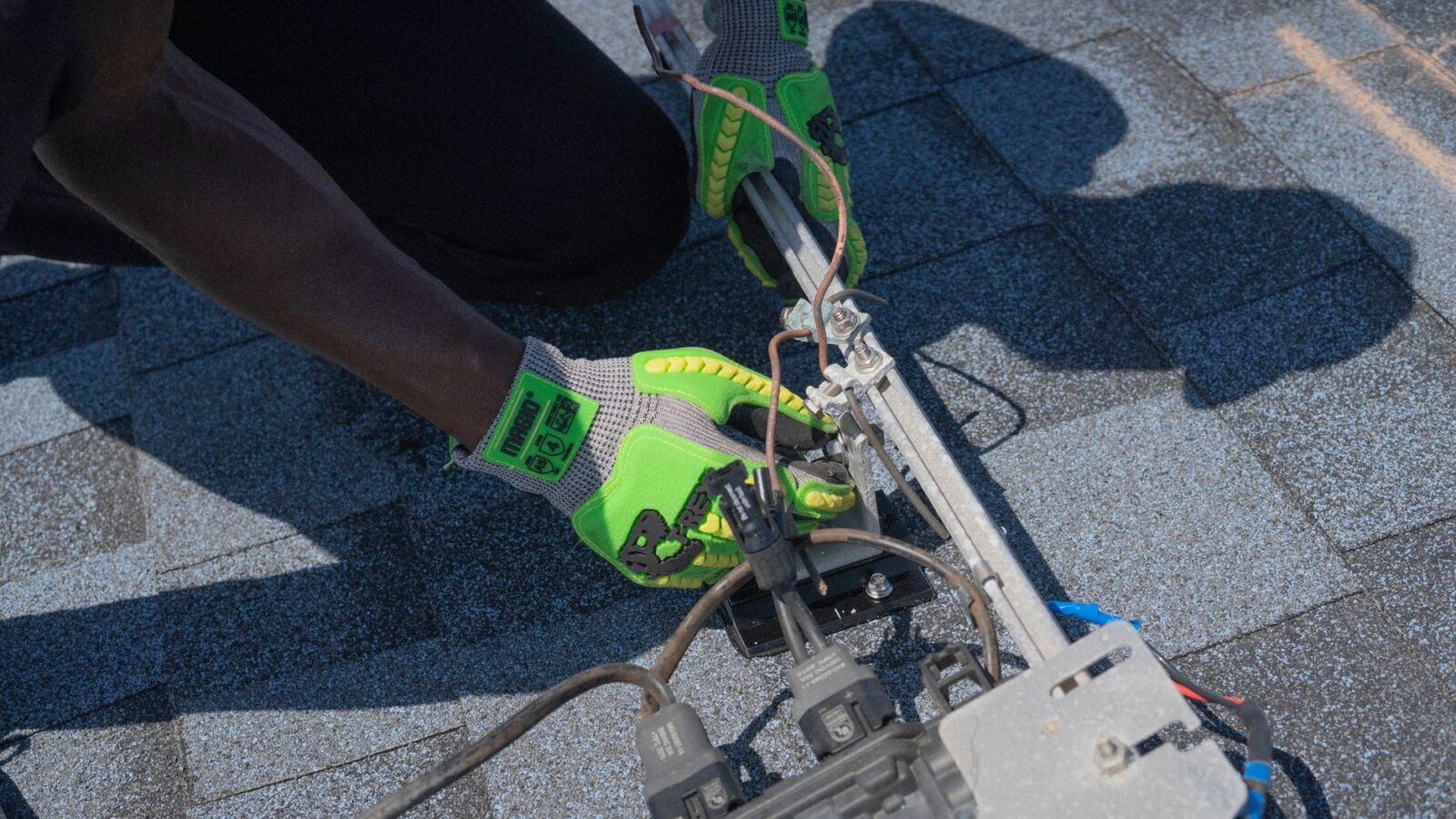
The panels went up on my friend Rina’s roof in Southeast Portland on a Tuesday in June. Her system did not produce a single kilowatt-hour until late August. Ten weeks, and only about three days of that was actual installation work. The rest was paper: a structural letter, an electrical permit, a city inspection, an interconnection agreement, and the final permission to operate. I want to walk you through that stack, because knowing where the queue is helps you push back when something stalls.
The five gates every residential solar project has to clear
Almost every rooftop PV project in the United States moves through the same five checkpoints, in roughly this order. The names vary by jurisdiction, but the function is the same.
- Structural review. An engineer signs off that your rafters can carry the added dead load and wind uplift.
- Electrical and building permit. Your city or county authority having jurisdiction (AHJ) reviews the plan set and issues permits.
- Installation. Actual roof work, usually 1 to 3 days for a 6-10 kW system.
- Inspection. The AHJ inspector (and sometimes a separate electrical inspector) checks the finished job.
- Interconnection and PTO. Your utility signs the interconnection agreement and issues permission to operate. Only then can you flip the AC disconnect on.
The U.S. Department of Energy’s SolarAPP+ program is trying to compress steps 1 and 2 into an instant online approval for code-compliant systems, and where it’s live, permit turnaround drops from weeks to about a day. As of 2024 it covered roughly 150 jurisdictions nationwide. Portland is not one of them yet.
Gate one: structural review
Solar panels themselves are surprisingly light, usually 2.5 to 3 pounds per square foot including racking. But a 1920s bungalow with 2×4 rafters on 24-inch centers is a very different animal from a 2005 truss-built ranch. My own house is the former, and when I finally get around to solar I already know I’ll need blocking added between at least a dozen rafters.
What the reviewer wants to see:
- Rafter size, species, spacing, and span
- Roof pitch and covering type (composition shingle, tile, metal, TPO)
- Attachment method and spacing (usually IronRidge FlashFoot2 or similar, at 48-inch spans)
- Wind and snow load values for your zip code, pulled from ASCE 7-16 or 7-22
Turnaround is usually 3 to 10 business days if your installer works with a PE (professional engineer) on retainer. If you have an unusual roof, budget two to three weeks and $300 to $800 for a site-specific letter.
Gate two: the permit itself
Your installer submits a plan set to the AHJ: a site plan, a one-line electrical diagram, panel and inverter spec sheets, a mounting detail, and the signed structural letter. In Portland the Bureau of Development Services handles this through their online portal, and simple residential solar tends to move in 5 to 15 business days. In some California cities using SolarAPP+, the same review is automated and returned within 24 hours. In other rural counties I’ve watched it take six weeks.
Fees vary wildly. A flat $250 permit is common; some jurisdictions charge by system size and end up closer to $500 to $900 total including plan review. The NREL soft-cost benchmark reports put average permitting, inspection, and interconnection costs at roughly $0.31 per watt for residential PV, which on an 8 kW system works out to about $2,500 in bundled soft costs. That number surprises homeowners every time I share it.
Documents to have ready before your installer submits
- Property deed or tax record (proves you own the roof)
- HOA approval letter if applicable, sometimes required upfront
- A copy of your last 12 months of electric bills for the interconnection app
- Your utility account number and meter number
- A recent aerial or site photo showing shading and setbacks
Gate three: installation
This part is fast and visible, which is why homeowners think of it as “the project.” A 7 kW system with 18 REC Alpha Pure panels and an Enphase IQ8 microinverter setup can be up in two working days if the roof is straightforward. Add a battery like an Enphase IQ Battery 5P or a Tesla Powerwall 3 and you’re looking at another day for the AC coupling, the backup load subpanel, and commissioning through the manufacturer’s app.
Gate four: inspection
The AHJ inspector shows up to verify the install matches the approved plans. They check conductor sizing, conduit runs, grounding and bonding, the placement and labeling of the AC disconnect, and the rapid-shutdown initiation device required under NEC 690.12 since the 2017 code cycle. Labels are the number-one reason for a red tag. If your placards aren’t UV-rated engraved plastic in the correct locations, expect a re-inspection fee of $75 to $150 and another week of scheduling.
Gate five: interconnection and permission to operate
This is where projects go to die. Your installer submits an interconnection application to the utility (often before permitting, in parallel). For residential systems under 25 kW on most Pacific Northwest utilities, the review is streamlined and the agreement is fairly boilerplate. The utility then schedules a meter swap or a firmware update on your existing smart meter so it can measure export.
Timelines I’ve watched in practice:
| Utility type | Typical PTO wait after passed inspection |
|---|---|
| Urban IOU with online portal | 2 to 4 weeks |
| Municipal utility | 3 to 6 weeks |
| Rural electric cooperative | 4 to 10 weeks |
| Any utility, systems over 25 kW | 8 to 16 weeks (supplemental study) |
The DSIRE database is the canonical place to check your state’s specific interconnection rules and net-metering successor tariffs. Read your utility’s rule page before you sign an installer contract, not after.
Where delays actually happen
In roughly this order of frequency:
- The meter swap. The utility crew is booked out three weeks and you’re the tenth job on Tuesday. There is nothing you or your installer can do to speed this up.
- Incomplete permit submittals. A missing MFR datasheet or an outdated wind-load map gets your application bounced back to the queue’s end. This is on your installer.
- Failed inspection over labeling. See above.
- HOA architectural review. If your HOA meets monthly, you can lose 30 days waiting for a meeting.
- Roof problems discovered mid-install. Rotted decking, undersized service panel, no room for a 200-amp busbar solar breaker under NEC 705.12(B). Expect a change order.
A worked example
Rina’s 7.2 kW system, from signed contract to PTO: 74 days total. Structural letter took 6 business days. Permit approval, 11 business days. Install, 2 days. First inspection failed for a missing “AC disconnect for utility” placard, corrected in 30 minutes, re-inspection 8 days later. Interconnection application had been submitted in parallel on day 3, so the utility was ready. Meter swap and PTO email arrived 16 days after passed inspection. Total soft-cost line items on her contract came to $2,180 on a $23,400 gross system, before the 30 percent federal Residential Clean Energy Credit.
What you can actually do to move things along
Ask your installer for a permit-and-interconnection tracker with dated line items. Read the contract clause about who eats the cost of a re-inspection. Confirm your service panel has capacity before you sign, using the 120 percent rule from NEC 705.12(B), because a main panel upgrade will add 3 to 6 weeks and $2,000 to $4,500 to the job. Keep your utility login handy so you can watch the interconnection status directly. And do not, please, turn the system on before the PTO letter arrives. Utilities can and do back-bill and disconnect for unauthorized generation.
Ten weeks feels slow when you’re staring at inert panels on your roof. But most of that time is queueing, not work, and if you understand which queue you’re in you’ll spend a lot less of it wondering.
Frequently asked questions
Can I start using my solar system before I get permission to operate?
No, and it’s worth taking seriously. Operating without PTO violates your interconnection agreement and can result in the utility disconnecting your service, back-billing you at retail rates, or refusing to sign the agreement at all. Some utilities also require you to physically lock the AC disconnect open until PTO is issued. Wait for the email or letter, then flip the switch.
Do I need a new electrical panel to add solar?
Sometimes. The NEC 705.12(B) 120 percent rule limits how much solar you can back-feed into an existing busbar. On a 200-amp panel with a 200-amp main breaker, you can typically add up to a 40-amp solar breaker without upgrading. If your panel is 100 or 125 amps, or already crowded with EV charging and heat pump circuits, a main panel upgrade running $2,000 to $4,500 may be required.
Who pays for a re-inspection if the first one fails?
Read your contract before signing. Most reputable installers cover re-inspection fees and labor to correct code issues at no cost to you, since the fail is on their workmanship or documentation. Some smaller shops pass the $75 to $150 re-inspection fee through. This clause is worth asking about specifically before you commit.
How do I check my utility's interconnection rules before choosing an installer?
Go to the DSIRE database at dsireusa.org and search your zip code. Filter for interconnection standards and net metering. You will find the current successor tariff, size limits, application fees, and required equipment certifications like UL 1741-SB. Reading this before you sign helps you spot installers who are quoting outdated compensation rates.
Does adding a battery change the permit timeline?
Usually yes, by a week or two. Batteries add a second equipment approval step, sometimes a separate electrical permit line item, and may trigger additional fire code review under IRC R327 or your state amendment for setbacks and ventilation. Utilities in states with active storage tariffs (California, Hawaii, Massachusetts) may also require a separate storage interconnection application on top of the PV one.
Related guides
How to Read a Solar Installer Quote Without Getting Lost
A solar quote can look like a 20-page wall of acronyms, model numbers, and disclaimers. It does not have to. Every proposal follows roughly the same shape, and once you know what…
What to Do When Your Solar Output Drops in Winter
The first winter with solar can be unsettling. Daily numbers shrink, your monitoring app shows long flat stretches, and it is easy to wonder if something broke. Most of the time, nothing…
How Many Solar Panels Your Home Actually Needs
A friend forwarded me a solar quote last month for 34 panels on her 1,600 square foot ranch outside Salem. She had asked one installer for a bid, taken what they proposed…