Monocrystalline vs. Polycrystalline Panels for Beginners
Almost every solar quote you read will mention monocrystalline or polycrystalline panels, sometimes both. The names sound like chemistry homework, and the marketing rarely helps. This guide breaks the choice down in…

Almost every solar quote you read will mention monocrystalline or polycrystalline panels, sometimes both. The names sound like chemistry homework, and the marketing rarely helps. This guide breaks the choice down in plain language, looks at where each type genuinely shines, and gives you a few honest rules of thumb so you can read a proposal without getting steered by jargon.
Walk into any solar conversation and you will hear two words tossed around like everyone already knows what they mean: monocrystalline and polycrystalline. Both describe silicon solar panels. Both have been on rooftops for decades. Both produce real, useful electricity. The differences are smaller than the marketing suggests, but they are real, and they matter at the edges where roof space, budget, or aesthetics are tight. Let us walk through the comparison the way I wish someone had explained it to me back when I was learning.
What the difference actually is
A solar cell is a thin wafer of silicon that turns sunlight into a flow of electrons. The “mono” or “poly” label describes how that silicon wafer was made, which then shapes how it looks and how efficiently it works.
Monocrystalline cells are sliced from a single, large silicon crystal grown slowly in a furnace using a process called Czochralski pulling. Because the crystal structure is uniform, electrons move through it with less interference. The cells look dark, almost black, with rounded corners on each square. Most modern home panels you see on roofs today fall into this camp.
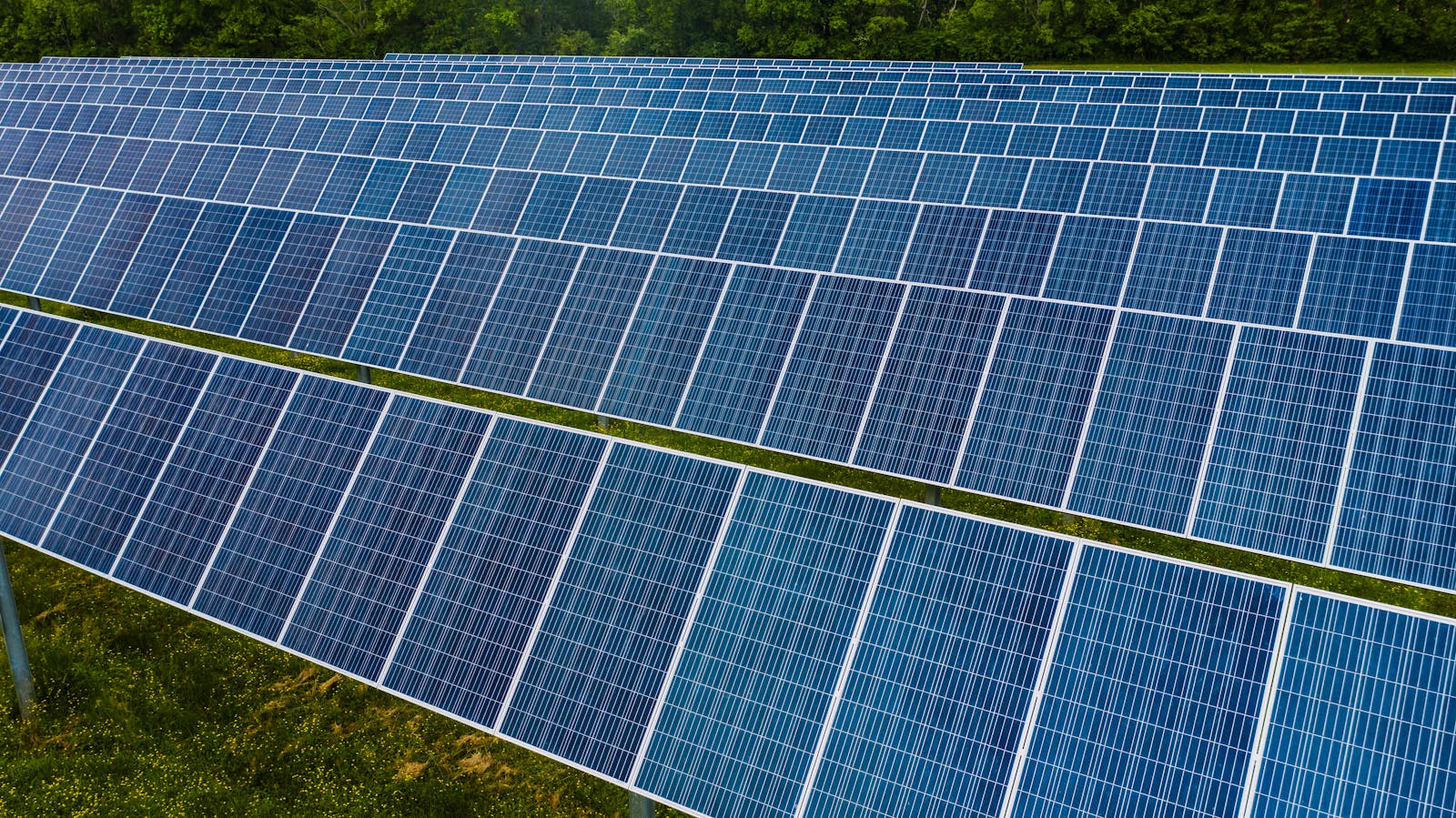
Polycrystalline cells are made from silicon that was melted down and poured into a square mold, where it cooled into many smaller crystals fused together. The result is a wafer with a speckled, marbled blue appearance and crisp square corners. The boundaries between crystals create tiny obstacles for moving electrons, which is why poly cells convert sunlight to power a bit less efficiently than mono cells of the same size.
That is genuinely the whole story at the physics level. Same silicon, different growing method, slightly different efficiency, very different look. Everything else is downstream of that one choice in the factory.
Where monocrystalline wins
For a typical 2026 rooftop install, monocrystalline is the default pick, and there are good reasons for it.
Efficiency per square foot. Mono panels currently convert about 19 to 23 percent of sunlight into electricity, assuming standard test conditions. Poly panels usually land around 15 to 17 percent. That gap of roughly 3 to 5 percentage points sounds small, but on a cramped roof it is the difference between covering your bill and falling short. If you only have space for 12 panels, getting 400 watts per panel instead of 320 watts per panel is meaningful.
Better behavior in low light and heat. Mono cells tend to hold up a little better on cloudy mornings and on hot summer afternoons. The temperature coefficient, a spec that tells you how much output drops as the panel heats up, is usually a touch friendlier on mono modules. In a hot climate this can add a few percentage points to your annual production.
Looks. This is not technical, but it matters. Mono panels with black frames and black backsheets read as a single dark surface from the street, which most homeowners prefer aesthetically. Some neighborhoods and homeowner associations also push back less when the array blends into the roof.
Selection and warranties. Because mono dominates the market, you get the widest choice of brands, wattages, and warranty terms. Production warranties of 25 to 30 years are now standard from mainstream manufacturers, and the price premium over poly has shrunk a lot since 2018.
Common situations where mono is the clearer pick:
- You have limited roof area and need every watt to count.
- You live in a hot climate where summer heat suppresses output.
- You want the cleanest, most uniform look on a visible roof face.
- Your installer’s catalog is already mostly mono, which is the norm in most regions.
Where polycrystalline holds its own
Poly panels are not dead, even if they have lost market share. There are still real cases where they make sense.
Lower price per watt. Poly modules are usually 5 to 15 percent cheaper per watt than equivalent mono panels, depending on the brand and the region. If you have plenty of roof space, those savings can add up across a 20 or 30 panel array. The trade is straightforward: you buy more panels with lower efficiency for a smaller total bill.
Plenty of space available. Ground mounts, large rural barns, and oversized garage roofs do not care if a poly panel is a little less efficient per square foot. You can simply add another row. In those settings, the cost savings often beat the efficiency penalty.
Mild climates. In cooler regions where panels rarely run hot for long stretches, the temperature gap between mono and poly narrows. Annual production differences shrink, and the price advantage of poly looks more attractive.
Used and surplus markets. A lot of older arrays use poly panels, so the secondary market for poly modules is healthy. If you are building an off grid cabin, a workshop array, or a learning project on a budget, used poly panels in good condition can be a sensible buy.
Honest caveats to keep in mind:
- Many residential brands have quietly dropped poly lines, so your installer may not even offer it.
- The blue speckled look is more visible from the street, which some homeowners dislike.
- Newer high efficiency mono panels can sometimes match poly’s cost per watt once you account for installation labor, which is similar regardless of panel type.
A note on thin-film
You will sometimes see a third option mentioned in catalogs: thin-film panels. These are made by depositing very thin layers of photovoltaic material, often cadmium telluride or amorphous silicon, onto a flexible or rigid backing. They are not made from crystalline silicon wafers at all, so they sit outside the mono versus poly debate.
Thin-film panels are usually less efficient, around 10 to 13 percent, but they are lighter, flexible, and perform a little better in partial shade and high heat. You see them most often on commercial flat roofs, on RV roofs where weight matters, and on curved surfaces where rigid panels will not fit. For a typical residential rooftop install, thin-film is rarely the right answer in 2026 because you usually run out of roof area before you run out of options. It is good to know the category exists, but most homeowners will not encounter it on a quote.
How to decide for your situation
Once you understand the basics, the decision usually comes down to four practical questions about your home, your budget, and your installer. Walk through them in order.
How much roof space do you have?
Measure or estimate the usable roof area facing roughly south, southeast, or southwest, avoiding chimneys, vents, and heavily shaded sections. If you have less than 400 square feet of clean space, lean toward monocrystalline. Higher efficiency per panel lets you hit your target system size without crowding. If you have a barn roof, a ground mount, or a large garage, the space pressure disappears and poly becomes a fair option again.
What does your installer actually stock?
Installers buy panels in pallet quantities and lean hard on the brands they already know. Many residential installers in North America and Europe have effectively standardized on mono in the past few years. If you ask for poly, you may get a longer lead time, a smaller selection of warranties, or a flat “we do not offer that anymore.” Reading a proposal carefully is more useful than insisting on a panel type. Our guide to how to read a solar installer quote walks through what to look for line by line.
What is your budget per watt?
If two quotes come back within 5 percent of each other, the panel type is rarely the deciding factor. If a poly system comes in significantly cheaper and your roof has room for the extra panels, the savings can be worth it. Just be sure you are comparing total system price, not panel price alone, since the inverter, racking, labor, and permits often dwarf the panel cost. For a fuller view of where your money goes, our piece on choosing the right solar inverter without overpaying covers the other big component in your quote.
How do you feel about how it looks?
Aesthetics are a real reason to choose one over the other. If your panels will sit on a front facing roof and you care about curb appeal, the uniform black look of all black mono modules is hard to beat. If your array is on a back roof or out of sight, the visual difference matters far less.
The simple summary
For most homeowners with a typical roof and a 6 to 10 kilowatt system, the answer in 2026 is monocrystalline, simply because the price gap has closed and the efficiency advantage is real. For larger ground mounts, big rural roofs, or projects where every dollar counts more than every square foot, polycrystalline still earns its place. Either way, the panel choice is one piece of a larger system. The inverter, the racking, the shading, the installer’s reputation, and your local electricity rate will all shape your results more than the silicon growing method. If you are still building up the basics, our broader solar panels explained for beginners guide is a good place to anchor the rest of the picture before you sign anything.
Read next: Five Solar Power Myths Quietly Costing Homeowners Money.
Frequently asked questions
Are monocrystalline panels always better than polycrystalline?
Not always, just usually. Mono panels offer higher efficiency, slightly better hot weather performance, and a cleaner look, which is why they dominate residential rooftops today. Poly panels still win on price per watt and remain a sensible choice for ground mounts, barn roofs, or budget projects with plenty of space. For most small to medium home installs in 2026, mono is the default pick, but neither type is objectively wrong.
How much more efficient are monocrystalline panels in practice?
Mono panels typically convert 19 to 23 percent of sunlight into electricity, while poly panels land around 15 to 17 percent under the same test conditions. On a real roof over a full year, this often translates to roughly 5 to 15 percent more energy per square foot of panel. The gap matters most when roof area is tight. If you have abundant space, the difference often does not justify the price premium.
Do polycrystalline panels last as long as monocrystalline panels?
Yes, more or less. Both technologies use crystalline silicon protected by tempered glass and weatherproof backsheets, and both commonly carry 25 year production warranties that guarantee at least 80 to 85 percent output at the end of that period. Real world degradation rates are similar, usually 0.4 to 0.7 percent per year. Build quality and brand reputation matter far more for longevity than whether the cells are mono or poly.
Can I mix monocrystalline and polycrystalline panels in the same system?
Mixing is technically possible but rarely a good idea. Different panel types have different voltage and current characteristics, and stringing them together usually drags the whole string down to the lowest performing module. If you must mix, separate the two types onto different strings or use microinverters or power optimizers so each panel works independently. For most homeowners, sticking to one panel model across the whole array keeps things simple and predictable.
Is the blue color of poly panels a problem in cold or hot climates?
The color itself does not affect performance. Both panel types absorb a wide range of sunlight regardless of how they appear to your eye. What does matter is the temperature coefficient, where mono panels tend to lose slightly less output as they heat up. In very hot climates this can add a small annual production advantage to mono. In mild or cool climates, the difference between the two types becomes nearly negligible.
Should I wait for a newer panel technology before installing?
Waiting rarely pays off. Solar panel efficiency has improved gradually over the past decade, usually by less than half a percentage point per year for mainstream products. Meanwhile you keep paying full utility bills while you wait. If your roof is sound, your finances are ready, and a good installer is available, current mono panels are plenty efficient. Newer technologies like perovskite or tandem cells are promising but not yet widely available for home use.
Read next in Solar Basics
If this guide was useful, these two neighbouring pieces will fill in the surrounding context:
Sources and further reading
For the underlying data behind the numbers in this guide, and for the standards, incentive programs, and safety rules referenced throughout, see:
Related guides
Step by Step: Setting Up a Balcony Solar Kit
A balcony solar kit is one of the friendliest ways to dip a toe into home solar. You get a small panel, a tiny inverter, and a plug that goes into a…
Solar Panels Explained for Complete Beginners
My neighbor in Portland once asked me, over the fence, whether solar panels still work on cloudy days. It is a fair question, and one I heard constantly in my community-energy days.…
A First-Solar Purchase Checklist You Can Actually Follow
Buying solar for the first time can feel like reading a menu in another language. This checklist breaks the process into four small phases so you always know what to do next.…