How Home EV Charging Actually Works
A friend of mine bought her first electric car last fall and called me three days later, slightly panicked, because she could not figure out whether to leave it plugged in overnight…

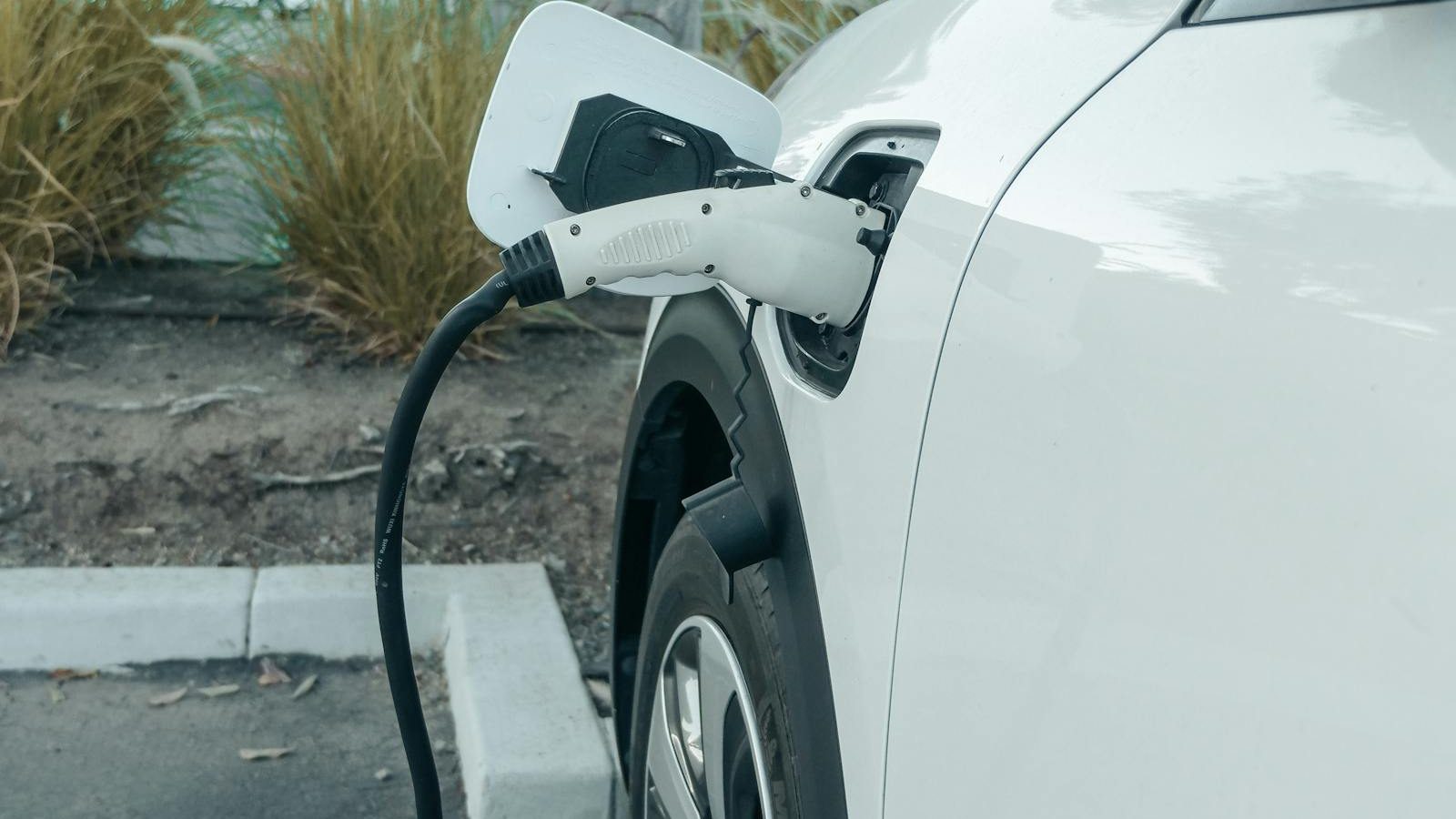
A friend of mine bought her first electric car last fall and called me three days later, slightly panicked, because she could not figure out whether to leave it plugged in overnight or unplug it after a few hours. That is the moment most new EV owners hit. The car arrives, the questions arrive with it, and nobody really sat you down and explained the basics. So here they are, slowly, in plain language.
Home charging is, for most drivers, the quiet revolution of owning an electric car. You stop thinking about gas stations. You stop planning trips around them. The car just sits in your driveway overnight, sips electricity at residential rates, and is full again by morning. But getting from “I just bought an EV” to “charging is boring and automatic” takes a small amount of upfront learning. This guide walks through what is actually happening when you plug in at home, and what to think about before you do.
If the EV itself is still a fresh concept for you, it may help to start with electric vehicles explained for first time buyers first, then come back here once you are clear on the car side. This piece focuses purely on what happens in your driveway or garage.
AC versus DC, in one quick paragraph
Your home’s wall outlets carry alternating current, or AC. Your car’s battery, like every battery on earth, can only store direct current, or DC. So somewhere along the line, AC has to be converted into DC before it reaches the battery. With slow and medium speed home charging, the car itself does that conversion using an onboard charger built into the vehicle. With public DC fast charging, a giant industrial unit at a highway station does the conversion outside the car and pumps DC straight into the pack at much higher power. Home charging is almost always AC. DC fast charging is a separate animal you mostly meet on road trips, and I compare the three tiers in Level 1 vs Level 2 vs DC fast charging compared if you want the side by side.
The EVSE is not actually “the charger”
This trips up almost everyone. The box on the wall that you plug into your car is called an EVSE, which stands for Electric Vehicle Supply Equipment. It is not, technically, the charger. The actual charger lives inside the car. The EVSE is more like a smart safety gatekeeper. It sits between your house wiring and your vehicle, and it does three quiet jobs:
- Confirms the car is plugged in correctly and the ground is intact before any power flows.
- Tells the car how much current the circuit can safely deliver, so the car never tries to pull more than the wiring can handle.
- Cuts power instantly if it senses a fault, like moisture in the connector or a wiring problem.
This is why you cannot just splice a regular extension cord onto a fat wire and call it a charger. The EVSE is a piece of safety equipment first, and a power delivery device second. Cheap “Level 1” units that ship in the trunk of a new EV are EVSEs too, just small ones that plug into a standard 120 volt household outlet.
Wall plug versus hardwired, and what really matters
Home charging comes in two practical flavors, and the distinction matters more for installation than for how the car behaves.
A Level 1 setup is just the small portable EVSE plugged into any normal three prong outlet. It adds roughly 3 to 5 miles of range per hour of charging. For a short commute, that is genuinely enough. For long commutes or weekend road trips, you will fall behind.
A Level 2 setup uses a 240 volt circuit, the same kind of supply that runs an electric dryer or a kitchen range. It adds roughly 20 to 35 miles of range per hour, depending on the car and the amperage. Most homeowners who drive more than 30 miles a day end up wanting Level 2 within a few months. The EVSE for Level 2 can either plug into a NEMA 14-50 outlet (basically a heavy duty wall socket) or be wired directly into the panel by an electrician. Plug-in units are easier to swap or take with you if you move. Hardwired units can usually deliver slightly more power and look tidier on the wall.
The panel and breaker side, briefly
This is the part nobody explains until the electrician shows up. Your home has a main electrical panel, often called a breaker box, that distributes power to circuits around the house. Each circuit is rated for a certain amperage. Adding a Level 2 EV charger means adding (or repurposing) a dedicated 240 volt circuit, usually 40 or 50 amps. Three things determine whether this is easy or expensive:
- Spare slots in your panel. If your panel is full, you may need a sub-panel or a load management device.
- Available service capacity. Older homes with 100 amp service may not have enough headroom for a high amperage charger if you also run AC, dryer, and an electric range. Some homes need a service upgrade to 200 amps, which is a meaningful expense.
- Distance from the panel to the parking spot. Longer wire runs cost more in both labor and copper.
A reputable electrician will check all three before quoting. I walk through the full process in step by step installing a home Level 2 charger, including the inspection and permit pieces most people forget about.
Why home charging is so much cheaper than DC fast charging
Public DC fast chargers are convenient on road trips but rough on your wallet for daily driving. A typical DC fast charging session runs somewhere in the 40 to 60 cents per kilowatt hour range in most markets, sometimes more during peak hours. Home electricity, by contrast, often costs 10 to 20 cents per kilowatt hour, and can dip below that on off-peak rates.
Put concrete numbers on that. A 60 kilowatt hour battery, charged from nearly empty to full, costs roughly:
- About $6 to $12 at home on standard residential rates.
- About $3 to $7 at home on off-peak rates, if your utility offers them.
- About $24 to $36 at a public DC fast charger.
Those numbers vary widely by region and utility, but the ratio holds almost everywhere: home charging is roughly two to five times cheaper than public DC. Multiply that across hundreds of charges per year and the difference becomes real money.
Time-of-use rates and why they change the math
Many utilities now offer what are called time-of-use (TOU) rates, where the price per kilowatt hour swings depending on the hour. Daytime and evening peaks (often roughly 4pm to 9pm) might cost 30 to 45 cents per kilowatt hour, while overnight off-peak windows (often midnight to 6am) might cost 8 to 15 cents. If you charge during the off-peak window, you save real money. If you charge during the peak window, you can actually pay more than you would on a flat rate plan.
This is where smart scheduling earns its keep. Both the car and most modern EVSEs let you set a “do not charge before X” rule. Plug in when you get home at 6pm, and the unit waits until midnight to start drawing power. You wake up to a full battery, having paid the cheapest possible rate for it.
Check your utility’s website before you assume your rate plan. Some utilities require you to opt in to TOU rates. A few offer dedicated EV plans that are even cheaper for overnight charging but slightly pricier during the day.
A sample weekly charging routine
This is what a fairly typical week looks like for someone driving a Level 2 charged EV with a 250 mile range, commuting about 30 miles round trip daily:
- Monday through Friday: Plug in when you get home in the evening. The EVSE waits until 12:30am to start. By 4am, the car has replenished the day’s commute and is ready for tomorrow. Unplug when you leave in the morning.
- Saturday: Errands, maybe 40 miles total. Plug in when you get back. Same overnight routine.
- Sunday evening: Top up to 80 or 90 percent for the week ahead. Skip charging entirely if the battery is still healthy from yesterday.
That is genuinely the whole rhythm. No stations, no waiting, no apps to swipe. The car becomes a thing you plug in like a phone, and unplug like a phone, and mostly forget about.
Smart charging features worth using
Modern EVSEs (and the car itself) usually offer a handful of features that are worth taking five minutes to set up:
- Scheduled start times tied to your TOU off-peak window. The biggest single source of savings.
- Charge limit by percentage, so the car stops at 80 or 90 percent for daily use and only fills to 100 percent before a long trip.
- Solar coordination, if you have rooftop solar. Some chargers can throttle up and down to match what your panels are producing in real time, so you charge the car directly from sunlight without exporting to the grid.
- Load sharing, if you have two EVs. A pair of compatible EVSEs can split available amperage so you do not overload the panel.
- Notifications, so you get a ping if a charge fails to start or stops unexpectedly. Cheap insurance against waking up to a flat battery.
You do not need to enable all of these on day one. Pick one, usually the off-peak schedule, get used to it, and add others later. Smart charging is meant to fade into the background. The goal is not to spend more time managing your car. The goal is to spend less.
The mental model worth keeping
If you remember nothing else, hold onto this picture. Home AC power flows through a safety device on your wall (the EVSE) into your car, where a built in charger converts it to DC and stores it in the battery. The pace depends on the circuit (120 volt is slow, 240 volt is much faster). The cost depends on when you charge (off-peak is cheap, peak is not). And the experience, once it is set up, is genuinely just plug in and walk away.
For most drivers, that turns out to be the quiet luxury of owning an EV. Not the acceleration. Not the silence. The simple fact that the car charges itself overnight, in your own driveway, while you sleep.
Frequently asked questions
Can I just use the cord that came with my EV, or do I need a Level 2 charger?
For short daily commutes under about 30 miles, the included Level 1 cord plugged into a regular outlet is often enough. For longer commutes, weekend trips, or two-EV households, Level 2 quickly becomes worth the install. A good rule: if you find yourself worrying about whether the car will be charged in time, you have outgrown Level 1.
Will charging an EV at home raise my electric bill a lot?
It will raise it noticeably but not shockingly. A typical driver adds roughly to per month in electricity, depending on miles driven and local rates. That is usually far less than they previously spent on gasoline. Switching to a time-of-use rate plan and charging overnight can cut that EV portion of the bill by 30 to 50 percent.
Is it safe to leave my EV plugged in overnight, every night?
Yes. The EVSE and the car both stop drawing power once the battery hits your set limit. Leaving it plugged in afterward is no different from leaving a fully charged phone on the charger. Modern systems are designed for this. The bigger habit to build is setting the charge limit appropriately for your battery chemistry, not unplugging at a specific time.
Do I need to upgrade my electrical service to install a Level 2 charger?
Often no, sometimes yes. Homes with 200 amp service usually have plenty of headroom. Homes with 100 amp service may need either a service upgrade or a smart load management device that throttles the charger when other big loads are running. An electrician can do a load calculation in about an hour and tell you exactly where you stand.
How long does a typical Level 2 home charging session take?
For most daily driving, you are only replacing 30 to 60 miles, which takes one to three hours on Level 2. A full charge from 20 to 80 percent on a typical 60 kilowatt hour battery takes about four to six hours at 7 kilowatts. Overnight is more than enough time, which is why most owners simply plug in before bed and forget about it.
Can I charge from rooftop solar instead of the grid?
Yes, and it is one of the most satisfying setups for solar owners. Some smart EVSEs coordinate directly with your inverter to charge only from surplus solar production. Even without that feature, simply charging midday on sunny weekends pulls heavily from your panels. The math gets especially good if your utility pays you less for exported power than it charges for imported power.
Read next in EV & Battery Basics
If this guide was useful, these two neighbouring pieces will fill in the surrounding context:
Sources and further reading
For the underlying data behind the numbers in this guide, and for the standards, incentive programs, and safety rules referenced throughout, see:
Related guides
How to Extend an EV Battery Lifespan Without Overthinking It
EV battery longevity is mostly the result of a few quiet habits repeated for years, not heroic effort. This guide walks through what actually matters on a daily, weekly, seasonal, and yearly…

The EV Tax Credit Explained in Plain English (2026 Rules)
A friend texted me a screenshot of a Chevy Equinox EV window sticker last month with one question: "Do I actually get the $7,500 off this, or is that just a headline?"…
Choosing a Home Battery for Power Outages
A reader in upstate New York emailed me last winter after losing power for three days during an ice storm. She had been looking at home batteries online for weeks and was…