Level 1 vs. Level 2 vs. DC Fast Charging Compared
Three charging options cover almost every EV owner today, and they are not interchangeable. This guide walks through Level 1, Level 2, and DC fast charging in plain language with simple math…

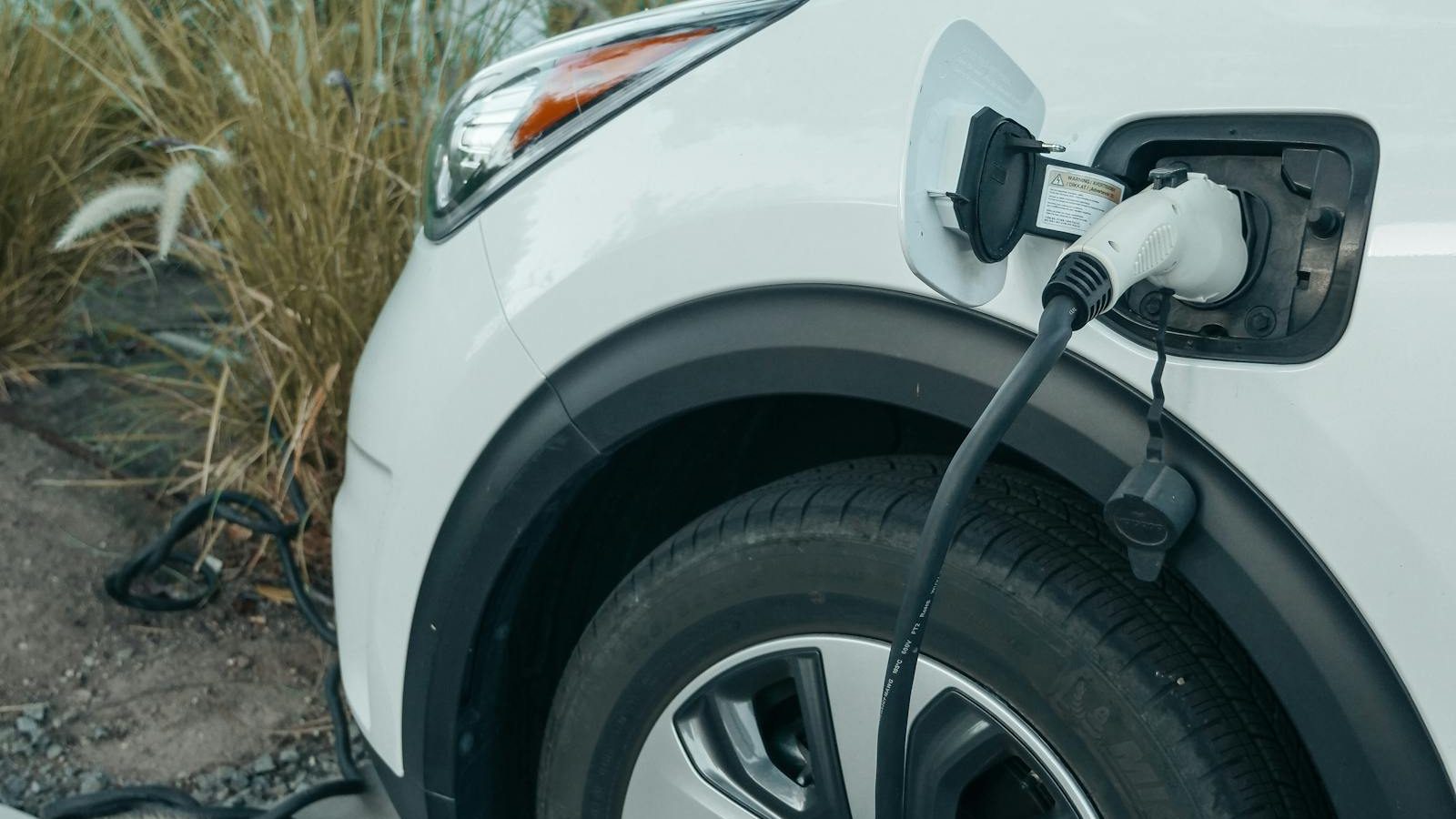
Three charging options cover almost every EV owner today, and they are not interchangeable. This guide walks through Level 1, Level 2, and DC fast charging in plain language with simple math for refilling an 80 kWh battery at each one. The goal is to help a first-time owner pick the right setup at home and stop overpaying for speed they will rarely use on the road.
Most new EV owners spend their first few weeks confused about charging. The car comes with a small cable that plugs into a regular outlet, the dealer mentions a faster wall unit, and a network of public stations promises a full battery in 20 minutes. All three of those are real options, but they fit into very different parts of daily life. Picking the wrong one for the wrong reason is how people end up frustrated, or worse, spending thousands on hardware they do not need.
This article walks through Level 1, Level 2, and DC fast charging the way an honest neighbor would explain them over coffee. We will look at the volts, amps, and kilowatts behind each label, the time it takes to refill a typical 80 kWh battery, the cost per kilowatt-hour at home versus public stations, and how often a typical owner actually needs the fastest option. By the end, you should know which setup belongs in your driveway and which one belongs only on a road trip.
The three charging levels in plain numbers
Charging is just electricity flowing into a battery, and the speed depends on volts times amps. More volts and more amps means more power, measured in kilowatts (kW), which means a faster refill. The three industry labels group chargers by the kind of power they deliver.
Level 1 uses a standard household outlet. In the US that is 120 volts at roughly 12 amps of usable current, which works out to about 1.4 kW of power delivered to the car. Most EVs come with a Level 1 cable in the trunk, often called a portable EVSE. Plug it into any grounded outlet and you are charging. Typical speed is around 3 to 5 miles of range added per hour, depending on the car and the weather.
Level 2 uses a 240 volt circuit, the same kind that runs a clothes dryer or electric range. Home units commonly draw 30 to 48 amps, delivering 7 to 11 kW to the car. A Level 2 charger needs a dedicated circuit and a wall-mounted unit, which is why installation costs more than zero. Typical speed is around 20 to 35 miles of range per hour. Most overnight home charging happens at this level.
DC fast charging, sometimes called Level 3, skips the car’s onboard converter and sends direct current straight into the battery at much higher voltages. Public stations today range from about 50 kW on the slow end to 350 kW on the fastest networks. Speed depends on the car as much as the station. A modern EV pulling 150 kW adds roughly 600 to 900 miles of range per hour at peak, though that rate slows as the battery fills.
Where each one fits in a real week
The numbers above only matter once they line up with how a car actually gets used. A typical US driver covers about 30 to 40 miles per day. That means most owners need to replace 30 to 40 miles of range each night, not 300.
Level 1 fits people who drive short distances and park overnight at home with access to a regular outlet. If you commute 20 miles round trip and have eight hours of overnight charging, Level 1 adds 24 to 40 miles in that window, which keeps you whole. Apartment dwellers with an outdoor outlet, retirees who run errands a few times a week, and second-car owners often discover that Level 1 is all they ever needed. The big appeal is zero installation cost.
Level 2 fits households with longer daily driving, multiple EVs, or anyone who wants the flexibility of leaving with a full battery every morning regardless of how late they got home. It also fits cold-climate owners, because battery preconditioning and cabin heating draw extra power that Level 1 cannot always backfill overnight. A weekend road trip that drains the pack also refills overnight on Level 2, which Level 1 cannot match. If you are weighing the install, our guide to how home EV charging actually works walks through the electrical basics in more depth.
DC fast charging fits road trips and emergencies. It is also useful for people without home charging at all, though using it as a daily solution costs more and stresses the battery harder than the slower options. For a typical owner with a driveway, DC fast charging gets used a handful of times per year, usually on trips of 200 miles or more.
The math of refilling an 80 kWh battery
An 80 kWh battery is a reasonable middle ground for modern EVs. Some sedans pack 60 kWh, some trucks pack 130 kWh, but 80 kWh covers a lot of the market. Here is what a full refill from 10 to 100 percent looks like at each level, using realistic delivered power rather than nameplate maximums.
- Level 1 at 1.4 kW: 72 kWh to add (90 percent of 80), divided by 1.4 kW, equals about 51 hours of continuous charging. Roughly two full days. Useful for topping off daily commute energy, not for full refills.
- Level 2 at 9.6 kW (40 amp circuit): 72 kWh divided by 9.6 kW equals about 7.5 hours. Easy overnight. A faster 11 kW unit drops that to about 6.5 hours.
- DC fast at 150 kW peak: The first 50 percent fills near peak rate, then tapers. A 10 to 80 percent fill (56 kWh) typically takes 25 to 35 minutes on a well-paired car and station. Pushing past 80 percent slows dramatically, so a full 10 to 100 percent fill often takes an hour or more.
Two things in that math surprise new owners. The first is that DC fast charging is not actually a full-fill technology. Charging curves taper sharply above 80 percent to protect the battery, so road trip planners almost always suggest stopping at 80 percent and rolling on. The second is that Level 2 covers full overnight refills with room to spare. There is rarely a reason to install anything faster at home.
Cost per kilowatt-hour: home versus public DC fast
The price gap between home charging and public DC fast is bigger than most new owners expect. Home electricity in the US averages around 0.13 to 0.18 USD per kWh in 2025, with regional variation. Off-peak overnight rates on time-of-use plans can be 0.08 to 0.12 USD per kWh in many areas.
Public DC fast charging typically runs 0.35 to 0.60 USD per kWh, sometimes higher in expensive markets. Some networks charge by the minute instead of by kWh, which can push effective rates above 0.60 USD per kWh on a car that charges slowly.
Translated to a full refill of an 80 kWh battery:
- Home Level 1 or Level 2 at 0.15 USD per kWh: about 12 USD for a full charge.
- Home off-peak at 0.10 USD per kWh: about 8 USD for a full charge.
- Public DC fast at 0.45 USD per kWh: about 36 USD for a full charge.
Across a year, that gap adds up. An owner who drives 12,000 miles in an EV that uses 30 kWh per 100 miles needs about 3,600 kWh per year. Charging exclusively at home costs roughly 540 USD at average rates, or as little as 360 USD on off-peak plans. Charging exclusively on DC fast networks costs roughly 1,620 USD. The fast network is convenient on trips, but it is not where a daily routine belongs.
How often most owners actually need DC fast
This is the question worth asking before buying any car or installing any equipment. Surveys of long-term EV owners in the US and Europe consistently show that 80 to 95 percent of charging happens at home or at a workplace. DC fast charging accounts for the rest, mostly on road trips of 150 miles or more.
For a typical owner, that works out to maybe four to twelve DC fast sessions per year. Holiday travel, occasional out-of-town meetings, a weekend cabin trip. Outside of those, the home charger handles everything. People who do not own a home charger lean on DC fast more heavily, but their overall cost per mile is meaningfully higher, and battery degradation tends to accelerate with frequent fast charging.
The trade-offs people get wrong
A few recurring misconceptions cause expensive choices. Worth naming them directly.
Faster is not always better at home. A 50 amp circuit costs more to install than a 30 amp circuit, often requires a permit and a panel inspection, and saves maybe an hour overnight on a typical fill. If you are charging while you sleep, the extra speed is invisible.
DC fast charging is for trips, not daily use. Repeated high-power sessions raise battery temperatures and accelerate long-term degradation. Most manufacturers recommend keeping fast charging to occasional use and relying on Level 1 or Level 2 for the daily routine. Battery warranties usually still hold either way, but the math favors home charging by a wide margin.
Level 1 is not useless. Plenty of owners get by with nothing but a 120 volt outlet for years. If your daily driving is under 40 miles and you park overnight, Level 1 is a complete solution. Skip the wall unit until you actually need it.
Public charging speed varies wildly. A 150 kW station only delivers 150 kW if your car can accept it, the station is not throttled by site limits, and the battery is in the right state of charge and temperature. Real-world session speeds often land at 60 to 120 kW even on premium hardware. Read the network’s app for live status before pulling in.
For a broader overview of what to look at when picking the car itself, our piece on electric vehicles explained for first time buyers covers range, total cost, and the questions worth asking a dealer. Pair that with a realistic charging plan and most of the EV confusion melts away in the first month of ownership.
Frequently asked questions
Can I install a Level 2 charger myself to save money?
In most US jurisdictions, a Level 2 install requires a licensed electrician and a permit, because it involves a 240 volt circuit on a dedicated breaker. Doing it yourself often voids the charger warranty, may void your homeowner insurance, and can fail a future home sale inspection. A typical professional install runs 500 to 2,000 USD depending on panel distance and any upgrades. That cost is usually paid back within the first year through cheaper charging at home.
Will using DC fast charging often actually hurt my battery?
Repeated DC fast sessions raise battery temperature and accelerate chemical aging, but the effect is gradual rather than dramatic. Studies on modern EVs suggest 5 to 10 percent extra capacity loss over eight years for owners who fast charge most days versus those who use home charging. Occasional road trip fast charging has almost no measurable impact. Manufacturers design battery thermal systems to handle both, so the trade-off is convenience versus a small long-term degradation cost.
How much does Level 1 charging really cost compared to gasoline?
An EV using 30 kWh per 100 miles charged at 0.15 USD per kWh costs about 4.50 USD per 100 miles in electricity. A gasoline car getting 30 mpg at 3.50 USD per gallon costs about 11.67 USD per 100 miles. The level of charging does not change the cost per mile because Level 1, Level 2, and DC fast all deliver the same kWh into the same battery. Only the price per kWh and the time taken differ.
Do I need a charger at all if my workplace offers free charging?
Maybe not. If your workplace offers reliable Level 2 charging during the workday and your commute fits within the round-trip range, you can often get by with no home charger at all. Keep the Level 1 cable in the trunk for backup. The risk is policy changes, broken chargers, or a job change. A 120 volt outlet at home covers most of those gaps without any new equipment.
What is the difference between a 30 amp and a 50 amp home charger?
A 30 amp circuit typically delivers about 7 kW to the car, adding roughly 25 miles of range per hour. A 50 amp circuit delivers about 11 kW, adding roughly 35 miles per hour. The 50 amp option needs heavier wiring, often a panel upgrade, and adds 300 to 800 USD to install costs. For overnight charging on one car driving under 80 miles daily, the 30 amp circuit is plenty.
Can I charge an EV from a solar panel system at home?
Yes, and the cost per mile becomes very low once the solar is paid off. A typical rooftop system in a sunny region produces enough surplus to cover an EV that drives about 12,000 miles per year, especially if charging happens during daylight. Pairing solar with a Level 2 charger and a smart schedule that prioritizes midday charging is the cheapest long-term way to fuel an EV.
Read next in EV & Battery Basics
If this guide was useful, these two neighbouring pieces will fill in the surrounding context:
Sources and further reading
For the underlying data behind the numbers in this guide, and for the standards, incentive programs, and safety rules referenced throughout, see:
Related guides
An Honest Budget for Going Electric, Without Surprises
A neighbor asked me last spring what going electric would actually cost, all in. She had read three glowing articles and one terrifying one, and she did not know which to believe.…
How to Extend an EV Battery Lifespan Without Overthinking It
EV battery longevity is mostly the result of a few quiet habits repeated for years, not heroic effort. This guide walks through what actually matters on a daily, weekly, seasonal, and yearly…
Five Myths New EV Owners Still Believe
Electric vehicles have been on the road long enough that we now have real data, not just brochures and forum guesses. A lot of the advice new owners hear was true in…