Troubleshooting an EV That Charges Slower Than Expected
A slower than expected charging session is rarely a single failure. It is usually a small stack of normal limits, all stacking at once, that adds up to a number on the…

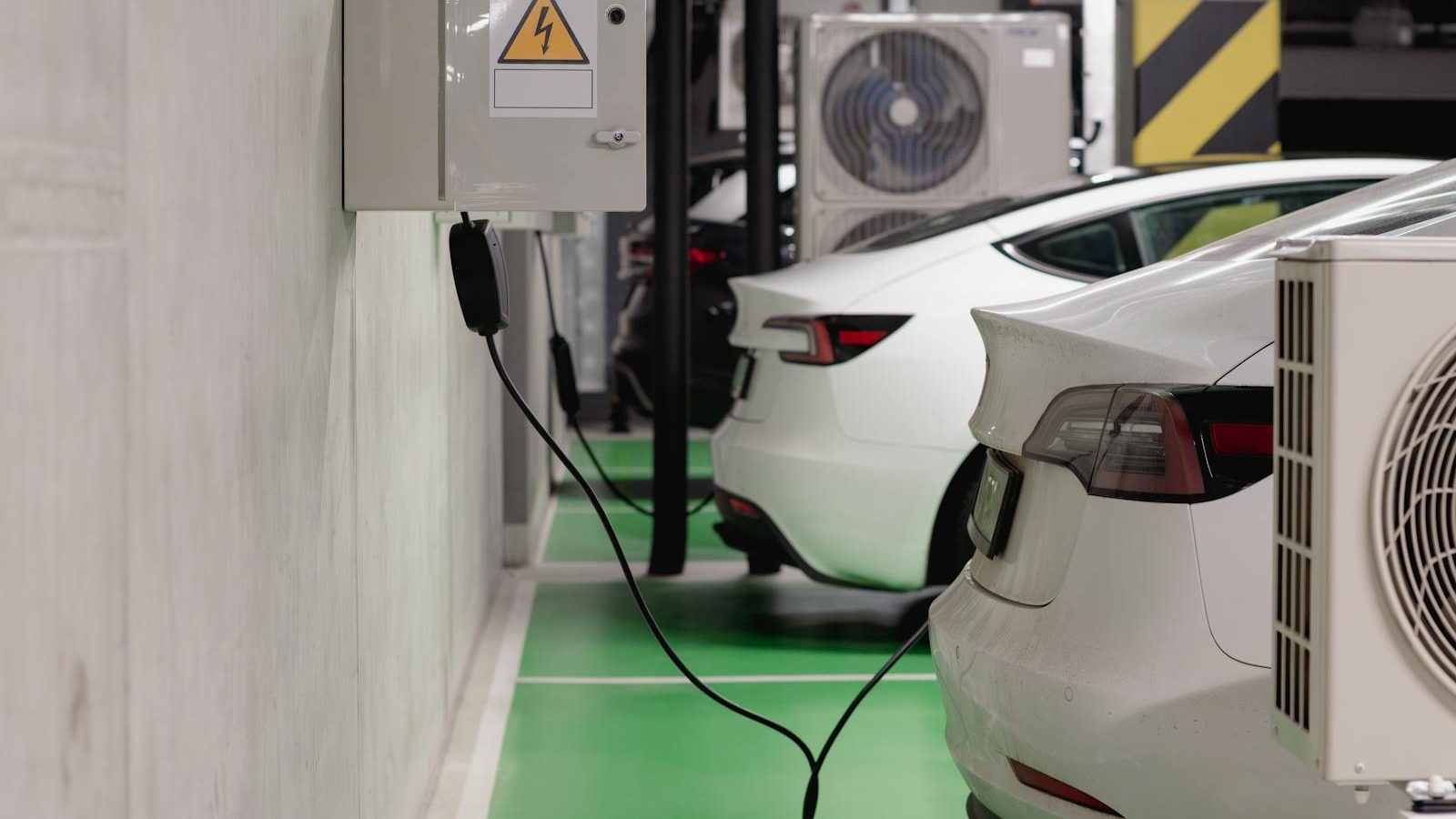
A slower than expected charging session is rarely a single failure. It is usually a small stack of normal limits, all stacking at once, that adds up to a number on the display that looks disappointing. This guide walks through the most common reasons a charge session falls short of the advertised speed, in the order you should check them, with rough numbers so you can tell a healthy slowdown from a real problem worth a service call.
Most slow charging complaints come from a mismatch in expectations rather than a broken cable. A station rated at 150 kW does not mean every car will pull 150 kW at every state of charge in every weather condition. The real number you get on any given session is whichever is lowest out of half a dozen separate limits: what your car can accept, what the station can deliver, what the local circuit allows, what the battery temperature permits, what the current state of charge allows, and how many other cars are sharing the same hardware. If any one of those drops, the whole session drops with it.
The good news is that almost every cause has a simple diagnostic. You do not need a multimeter or an OBD2 dongle to figure out what is going on most of the time. You just need to walk through the possibilities in a sensible order and rule each one out. Here is that order.
Step one: confirm the baseline (car versus station)
Before you blame anything, write down two numbers: the maximum charging rate your specific car accepts, and the maximum rate the station can deliver. The slower of the two is the ceiling for that session, and you cannot exceed it no matter what you do.
Your car’s accepted rate is in the owner’s manual, on the manufacturer’s spec sheet, and usually on a sticker inside the charge port door. It is split into two figures: AC charging (Level 1 and Level 2, expressed in kW or amps) and DC fast charging (expressed in kW). A typical 2020 to 2024 EV accepts somewhere between 7 and 11 kW on AC, and between 50 and 250 kW on DC, depending on the model. A few high-end cars push past 270 kW on DC, but they are the exception.
The station’s maximum is on its label or in the app. A 150 kW station paired with a car that tops out at 100 kW will never deliver more than 100 kW, and that is working exactly as designed. A 350 kW station paired with the same car still tops out at 100 kW. If you want to confirm what each tier means in practice, our overview of Level 1 versus Level 2 versus DC fast charging walks through the speed ranges for each.
If your car accepts 50 kW DC and you plug into a 150 kW station expecting fast results, the disappointment is built into the spec sheet, not the hardware.
Step two: cold battery and the preconditioning question
Lithium-ion batteries do not like being charged cold. Below about 10 degrees Celsius (50 Fahrenheit), the chemistry slows down, and the car’s battery management system caps the charging rate to protect the cells from lithium plating, which is a permanent form of damage. A cold pack can pull as little as 20 to 40 percent of its normal DC fast charging speed for the first 10 to 20 minutes of a session, ramping up only as the battery warms.
Most modern EVs have battery preconditioning built in. If you set your destination to a fast charger in the car’s navigation system, the car warms the pack on the drive over, so you arrive with the battery already in the optimal temperature range. Cars without this feature, or drivers who skip the nav step, often see slow first-15-minute sessions and assume the station is broken.
- Use the in-car navigation to route to the charger whenever possible, even if you already know where it is
- Look for a “precondition battery” button in the climate or charging menu if your car offers manual control
- Expect slow sessions in winter when you have driven only a short distance before arriving, since the pack has not had time to warm from driving
- Watch the kW number rise over the first 10 to 15 minutes as the pack warms, if it climbs steadily that is a preconditioning issue, not a hardware fault
Step three: state of charge and the taper above 80 percent
Charging is not linear. Every EV slows down as the battery fills, and the slowdown gets sharp above about 80 percent state of charge. This is called the taper, and it is a physical property of lithium-ion chemistry, not a flaw. Trying to push current into an already-full cell causes heat and damage, so the car deliberately slows the rate as you approach 100 percent.
A typical DC fast charging curve looks roughly like this: peak rate from about 10 to 50 percent, gradual decline from 50 to 80 percent, then a steep drop from 80 to 100 percent. Going from 10 to 80 percent on a 150 kW station might take 25 minutes. Going from 80 to 100 percent on the same station can take another 30 to 45 minutes, even though you are only adding a quarter of the energy.
The practical rule on a road trip is to unplug at 80 percent and drive to the next charger. You will spend less total time on the trip than if you sit through the taper at every stop. The exception is the final charger before you reach a destination without fast charging, where you might top up to 90 or 100 percent because there is no faster alternative downstream.
Step four: shared station capacity
Many fast charging sites have multiple stalls but a shared power cabinet behind them. The site might be rated for 350 kW total across four stalls. When one car is plugged in, it can draw the full 350 kW (if its car accepts that much). When two cars are plugged in, the total capacity is split between them, often giving each one 175 kW. When all four stalls are in use, each car may get 87 kW.
This split is invisible from the car. The station does not announce that it is sharing capacity. The only signs are a slower than expected rate and a busy parking area. If you pull into a fast charging site that looks full and your session is slow, try moving to a different stall pair after the first car leaves, or wait a few minutes for the load to drop.
Tesla Superchargers handle this differently: paired stalls share a cabinet, so a stall labeled 2A and 2B will split power if both are in use, while stalls 1A and 3B (different pairs) will not interfere with each other. Other networks vary, and the splitting logic is rarely published.
Step five: vehicle-imposed limits and the 12 amp default
When charging on AC at home or at a Level 2 public station, your car may impose its own current limit that is lower than the station can deliver. The most common case is a 12 amp safety default, used when the car detects a portable Level 1 cable plugged into a standard household outlet. This protects the outlet from overheating, but if you have set up a proper Level 2 install and the car is still pulling only 12 amps, something is misconfigured.
Check the car’s charging menu for a current limit setting. Many EVs let you set the maximum amps on a per-location basis, so a setting you reduced at a friend’s house may have stuck. Reset it to the full rated current and confirm the rate climbs. If the car is on its first session at a new EVSE, it sometimes takes a minute or two to negotiate the maximum rate.
Step six: home circuit derating
Home AC charging speed is capped by the breaker on the circuit serving the EVSE. By the electrical code in most countries, a continuous load can use no more than 80 percent of the breaker rating. A 40 amp breaker therefore supports a 32 amp continuous draw, which on 240 volts works out to about 7.7 kW. A 50 amp breaker supports 40 amps, or about 9.6 kW. A 60 amp breaker supports 48 amps, or about 11.5 kW.
If your home EVSE is on a 30 amp breaker because that was the largest spare slot in the panel at the time of install, your maximum charging rate is about 5.8 kW, regardless of what the EVSE label promises. Upgrading the breaker and wire is possible but not always cheap, and it may require panel work. Our piece on how home EV charging actually works covers the wiring, breaker, and EVSE picks in more detail.
Step seven: cable and adapter quality
The portable charging cable that came with your car is usually rated for a specific maximum current, and using a cheap third-party replacement can quietly limit your rate. Aftermarket adapters that let you plug a CCS car into a Tesla destination charger, or vice versa, often introduce small resistance losses or current caps. If you have recently switched cables or adapters and the rate dropped, the new accessory is the prime suspect.
Inspect the connector itself for damage, corrosion, or melted plastic. A pin that looks discolored or pitted is a sign of past arcing, and it adds resistance that becomes heat during a charge session. Some cars detect this and reduce current to prevent further damage. If you see any visible damage on a public station’s connector, do not plug in. Report it to the network and use a different stall.
Step eight: charging session error codes
Most EVs and EVSEs log error codes during a slow or failed session, and most car apps now show them. Common codes include ground fault errors, communication faults between the car and station, contactor faults inside the car, and temperature derating notices. The code itself is usually a string of letters and numbers that means little to a driver, but a quick search of the code along with your car model often turns up a forum thread with a fix or a recall notice.
If the same code appears across multiple stations, the issue is almost certainly in the car. If it appears only at one station, the issue is in that hardware. Save the codes and the timestamps before you call service, since dealers and network operators can act faster when they have specifics.
When to suspect the car versus the station
After walking through the steps above, you usually end up in one of two buckets. If the slow rate persists at multiple stations on different networks, the problem is in the car: a sensor, a contactor, a software bug, or in rare cases a degraded battery pack. Schedule a service appointment and bring the error codes. Pack degradation severe enough to cap charging rates usually shows up alongside reduced range, so check whether your range estimate has dropped over the last year as well. Long-term habits that protect the pack are covered in our notes on how to extend an EV battery lifespan.
If the slow rate is specific to one station, the problem is in the hardware or the network. Report it through the network’s app and try another site. Networks rely on user reports to flag failing stations, since they cannot monitor every stall in real time. Your bug report helps the next driver.
And if the slow rate happens only sometimes, the problem is conditional: weather, battery temperature, sharing, or state of charge. These are not faults, just the realities of charging chemistry and infrastructure. Knowing which condition triggered the slowdown lets you plan around it next time, whether that means preconditioning before arrival, unplugging at 80 percent, or stopping at a less crowded site.
Frequently asked questions
Why is my EV charging at only 7 kW when the station says 50 kW?
The most common reason is that you are plugged into the AC side of a dual-standard station rather than the DC side. Many fast charging sites have both a CCS or CHAdeMO connector (DC, up to 50 kW or more) and a J1772 or Type 2 connector (AC, up to 7 to 22 kW). Confirm which cable you are using. If you are on the DC connector and still seeing 7 kW, the issue is likely battery temperature, a high state of charge, or a station fault worth reporting.
Does cold weather really cut my charging speed that much?
Yes, and it is one of the most underappreciated factors in winter charging. A battery below about 10 degrees Celsius can be limited to 20 to 40 percent of its normal fast charging rate for the first 10 to 20 minutes of a session. The cell chemistry slows down at low temperatures, and the car protects itself by capping current. Using your car navigation to route to the charger usually triggers battery preconditioning, which warms the pack on the drive over and restores normal rates.
Why does my car slow down so much above 80 percent?
Lithium-ion batteries physically cannot accept high current when nearly full without overheating or plating lithium on the electrodes, both of which damage the pack. The charging curve naturally tapers from about 80 percent upward, regardless of which station you use or which car you drive. Going from 80 to 100 percent often takes longer than 10 to 80 percent did. On road trips, plan to unplug at 80 percent and reach the next charger rather than waiting through the taper.
How can I tell if a slow session is the station fault or my car fault?
Plug into a different station on a different network and see if the slow rate follows you. If the second station delivers the rate you expect, the first station was at fault. If the second station is also slow, the issue is in your car or in the conditions of the session, such as a cold pack or a high state of charge. This single comparison rules out about half the possible causes and tells you whether to call your dealer or report the station.
My home charger is rated for 11 kW but I only see 7 kW, what is wrong?
The most likely cause is a smaller breaker than the EVSE is rated for. A 40 amp breaker supports a 32 amp continuous draw, which on 240 volts is about 7.7 kW. To get the full 11 kW, the EVSE needs a 60 amp breaker and properly sized wire. Check the breaker label in your electrical panel. The other common cause is a current limit set on the car for that specific location, which is worth checking in the charging menu.
Should I worry that slow charging is damaging my battery?
No, slower charging is generally easier on the battery, not harder. The slowdowns described here are protective measures designed to prevent damage, not damage in themselves. The chemistry-protecting taper above 80 percent and the cold-weather derating both extend pack life. What can damage the pack is repeatedly fast charging a cold battery or holding it at 100 percent for long periods, which is why most manufacturers recommend a daily charge limit of 80 to 90 percent for everyday driving.
Read next in EV & Battery Basics
If this guide was useful, these two neighbouring pieces will fill in the surrounding context:
Sources and further reading
For the underlying data behind the numbers in this guide, and for the standards, incentive programs, and safety rules referenced throughout, see:
Related guides
Five Myths New EV Owners Still Believe
Electric vehicles have been on the road long enough that we now have real data, not just brochures and forum guesses. A lot of the advice new owners hear was true in…
Level 1 vs. Level 2 vs. DC Fast Charging Compared
Three charging options cover almost every EV owner today, and they are not interchangeable. This guide walks through Level 1, Level 2, and DC fast charging in plain language with simple math…
Checklist Before Buying Your First Electric Car
Buying your first electric car is exciting, and a little disorienting. The vocabulary is new, the buttons feel different, and the salesperson is usually more enthusiastic than informative. A simple checklist, worked…