How Rooftop Solar Actually Works (Without the Jargon)
A homeowner I worked with last spring stood on her driveway, looked up at her roof, and asked me the question almost everyone secretly wants to ask: "So, how does this stuff…

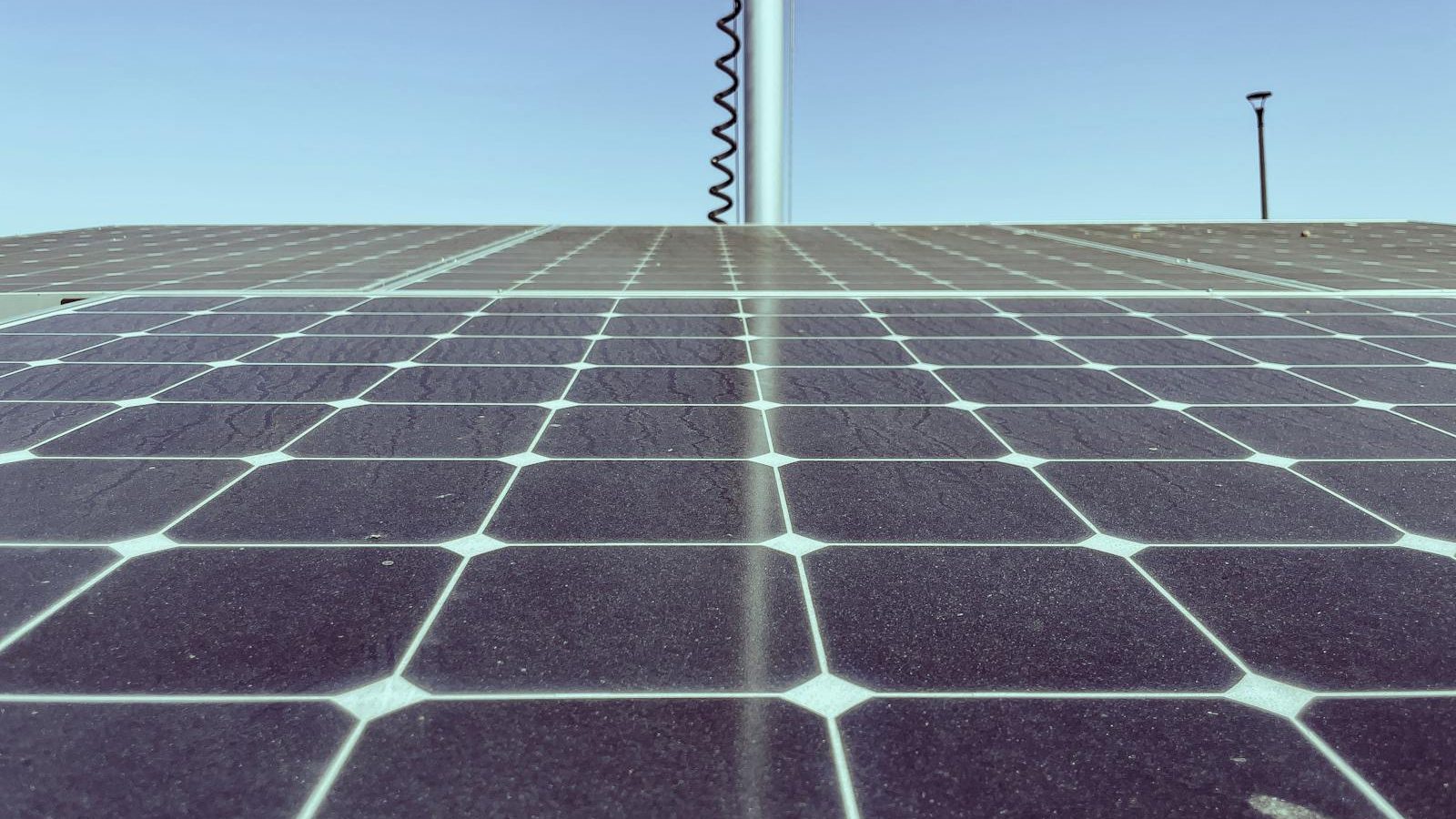
A homeowner I worked with last spring stood on her driveway, looked up at her roof, and asked me the question almost everyone secretly wants to ask: “So, how does this stuff actually work?” Not the marketing version. The real one. If you have wondered the same thing, this guide walks you through it slowly, in plain language, with no electrical engineering degree required.
Solar panels look almost suspiciously simple. A flat dark rectangle sits on a roof, makes no noise, has no moving parts, and somehow keeps the lights on. The first time I saw a working system up close, I remember thinking it had to be more complicated than it looked. It is, a little. But the core idea is genuinely elegant, and once you see the flow from sunlight to socket, the whole thing stops feeling like magic.
This guide is for the curious beginner. We will walk through what happens between a photon leaving the sun and an electron lighting up your kitchen, and we will name the parts along the way so you can speak the language when an installer comes out to quote you.
It starts with photons hitting a very particular kind of sand
Sunlight is made of tiny packets of energy called photons. They leave the sun, travel for about eight minutes, and eventually rain down on whatever surface is facing the sky. Most surfaces just absorb that energy as heat. A solar panel is built to do something different. It converts a chunk of that incoming light directly into electricity.
The trick lives inside the panel, in a layer of treated silicon. Silicon, the same stuff that beach sand is mostly made of, has a quirky property: when a photon of the right energy strikes it, an electron inside the silicon gets bumped loose. On its own, that electron would just wander back to where it was. But solar cells are built in two layers, one with a slight surplus of electrons and one with a slight shortage, and the boundary between them acts like a one-way door. Knocked-loose electrons have to travel out through wires before they can settle back down.
That flow of electrons through wires is, by definition, an electric current. That is it. That is the whole headline trick. Everything else in your solar system is plumbing built around this one small miracle.
A single solar cell is small, about the size of a coaster, and produces only a tiny voltage. So manufacturers wire dozens of cells together behind a sheet of tempered glass to make a panel, and then several panels get wired together on your roof to make an array. If you want a deeper look at the panel itself before going further, I wrote a slower walkthrough in solar panels explained for complete beginners.
The electricity that comes out is not the kind your house can use
Here is the first wrinkle. The current produced by a solar cell is direct current, usually shortened to DC. It flows in one steady direction, the way current flows out of a battery. Your household appliances, though, are built to run on alternating current, or AC, which reverses direction many times per second. The grid runs on AC. Your fridge, your TV, your washing machine, all AC.
So between the panels and your breaker panel sits a device called an inverter. Its job is to take the DC pouring in from the roof and convert it into clean AC at the right voltage and frequency for your home and the grid. There are a few flavors of inverter, and the differences matter:
- String inverter: one central box, usually mounted near the breaker panel or on the side of the house. All the panels feed into it. Simple, often cheaper, but if one panel in the “string” gets shaded, the whole string drops in output.
- Microinverters: a small inverter attached to the back of every single panel. Each panel does its own conversion, so a leaf shadow on one panel only hurts that panel. Costs more upfront, but tends to age well.
- Power optimizers: a middle ground. A small box on each panel handles the per-panel optimization, but the actual DC-to-AC conversion still happens at a central inverter.
Most modern residential systems use either microinverters or optimizers, because partial shade is so common on real roofs. Trees grow. Chimneys cast shadows. A neighbor builds an addition. You want a system that does not collapse the moment one panel has a bad afternoon.
From the inverter, the power has somewhere to be
Once the inverter has produced clean household AC, that electricity flows into your home’s main electrical panel, the gray box in the garage or basement with all the breakers. From there it behaves exactly like grid power. It does not “know” it came from your roof. Your fridge does not care. The current simply takes the easiest path to whatever is asking for power.
And this is where something genuinely cool happens. If your panels are producing more than your home needs in that moment, which is normal on a sunny midday when no one is home, the surplus does not just vanish. It pushes back out through your meter and onto the local grid, where your utility either credits you for it (a setup called net metering) or pays you a wholesale rate for it (called a feed-in tariff). The exact arrangement depends on your state, your utility, and the year you signed up.
The meter on the side of your house, if it is a modern bidirectional one, is what makes this possible. Old-style meters could only count power flowing one direction. New ones count both ways. When you “sell power back to the grid,” you are not literally selling it. You are running your meter backward and getting a credit on your bill.
At night, or on a heavily overcast day, the flow reverses. Your panels make little or nothing, and your home pulls power from the grid like normal. For most grid-tied homes, this back-and-forth happens silently in the background, all day, every day, and you never think about it.
What about batteries, and what happens during a blackout?
Here is something a lot of new solar shoppers find genuinely surprising: a standard grid-tied rooftop system will shut down during a power outage, even if the sun is blazing. This is not a flaw. It is a safety feature called anti-islanding. It prevents your panels from sending power down a wire that a utility worker might be trying to repair.
If you want your home to keep running when the grid goes dark, you need a battery, usually paired with a hybrid inverter that knows how to “island” your home, disconnect from the grid, and keep your circuits humming on stored solar energy. Batteries also let you store excess midday production and use it after sunset, which is increasingly attractive in places where net metering credits have been getting less generous.
Batteries are a whole separate decision, with their own costs and tradeoffs. I will not go deep on them here, but the short version: a battery roughly doubles the upfront cost of a system, and it makes the most sense if you have frequent outages, time-of-use rates, or a strong desire for energy independence. If full independence is what you want, the conversation looks different again, and going truly off-grid is a separate path with its own logic.
One small Maya-style aside: a lot of people imagine solar means “the lights stay on no matter what.” It can mean that, but only with the right setup. Worth asking explicitly when you talk to an installer.
Putting the whole flow together
So, end to end, here is what is actually happening on a sunny Tuesday afternoon:
- Photons leave the sun, travel through the atmosphere, and hit the silicon cells in your roof panels.
- Those photons knock electrons loose inside the cells, and the layered structure of the cell forces those electrons to flow in one direction, creating DC electricity.
- The DC flows down wires from the roof to the inverter (or the inverter chips on each panel).
- The inverter converts DC into AC at household voltage and frequency.
- That AC feeds into your main electrical panel and powers whatever is running in your house.
- If there is leftover power, the surplus flows back through your meter into the grid, and you get credited.
- When the sun sets, the flow reverses and you pull from the grid (or a battery, if you have one) until morning.
That is the entire loop. No moving parts on the roof. No fuel burning. No noise. The hardware just sits there and quietly converts daylight into electrons for two or three decades.
Rooftop is, of course, only one shape solar can take. Smaller portable kits work on a similar principle but with very different wiring and use cases, which I cover in portable solar kits vs rooftop systems. Same physics, different scale, different lifestyle.
If you can hold this mental model in your head, photons in, AC out, surplus to the grid, you will follow almost any conversation about solar without needing the jargon. The rest is mostly details: how many panels, what direction your roof faces, what your utility pays you back, and whether to add a battery. Those are real decisions worth thinking through carefully, but the core science underneath all of them is the small, strange, lovely thing that happens when light hits silicon.
Read next: Step by Step: Setting Up a Balcony Solar Kit.
Frequently asked questions
Do solar panels work on cloudy days?
Yes, just at reduced output. Panels typically produce 10 to 25 percent of their rated power on heavily overcast days, and 40 to 80 percent on light cloud cover. Diffuse daylight still delivers real solar radiation, just at reduced intensity. Annual production estimates already account for typical cloud patterns in your region, so a few gray weeks will not wreck your numbers.
How long do rooftop solar panels last?
Most modern panels carry a 25 year performance warranty and often keep producing usefully for 30 years or more. Output drops gradually, usually around 0.5 percent per year. The inverter is usually the first component to need replacement, somewhere between year 10 and 15 for string inverters, or closer to year 25 for microinverters.
What happens to my solar power when no one is home?
If you have a standard grid-tied system, the surplus flows back into the grid and your meter runs backward, earning you credits or payments depending on your local arrangement. If you have a battery, the battery charges first and then any extra goes to the grid. Nothing is wasted, assuming your interconnection paperwork is in order.
Will my solar panels keep working if the grid goes down?
Not with a standard grid-tied system. They shut off automatically during outages for safety reasons, so utility workers can repair lines without risk. To keep your home powered during blackouts, you need a battery and a hybrid inverter capable of “islanding” your home from the grid. Ask installers specifically about backup capability when getting quotes.
Do solar panels need a lot of maintenance?
Surprisingly little. Rain handles most cleaning, and there are no moving parts on the roof to fail. A visual inspection once a year, occasional rinsing if you live somewhere very dusty or near heavy pollen, and monitoring your production app for sudden drops is roughly the whole job. Inverter replacement is the main long-term expense to plan for.
Is rooftop solar worth it if I do not have great sun exposure?
It depends on the specifics. A roof with partial shade or a non-ideal direction can still pay back, just more slowly. Microinverters or optimizers help a lot with partial shade. Get a site assessment that models your actual roof, not a generic estimate. If the payback period stretches past 12 to 15 years, the case gets weaker.
Read next in Solar Basics
If this guide was useful, these two neighbouring pieces will fill in the surrounding context:
Sources and further reading
For the underlying data behind the numbers in this guide, and for the standards, incentive programs, and safety rules referenced throughout, see:
Related guides
Solar Panel Maintenance for Busy Homeowners
Solar panels are one of the lowest-maintenance pieces of equipment on your house, but lowest does not mean none. A few small habits, repeated at the right cadence, will keep your system…
Five Solar Power Myths Quietly Costing Homeowners Money
Solar advice ages fast, and a lot of what people repeat at backyard barbecues was true a decade ago and is not true now. If you have ever talked yourself out of…
What to Do When Your Solar Output Drops in Winter
The first winter with solar can be unsettling. Daily numbers shrink, your monitoring app shows long flat stretches, and it is easy to wonder if something broke. Most of the time, nothing…